essay — 31.05.2026
THE MONUMENTALIZATION OF THE ORDINARY: PHILIPPE STARCK’S LA ALMAZARA
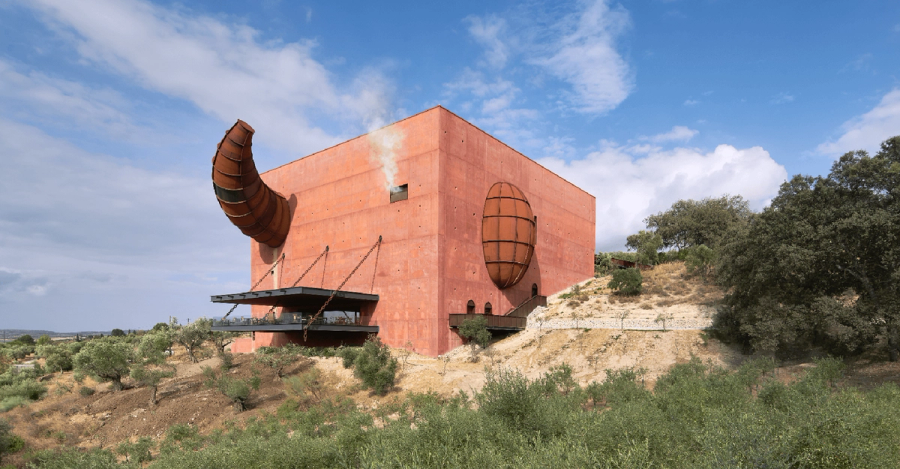
THE WEAPONIZATION OF AESTHETICS: REDEFINING THE COMMODITY In the modern attention economy, the "raw" is no longer a viable market position. Philippe Starck’s LA ALMAZARA in Ronda is the ultimate case study in how the most basic human staples, in this case, olive oil: are being weaponized with aesthetics to secure a new tier of economic value. This is not just a building; it is a Strategic Interface that redefines the relationship between origin, production, and prestige.
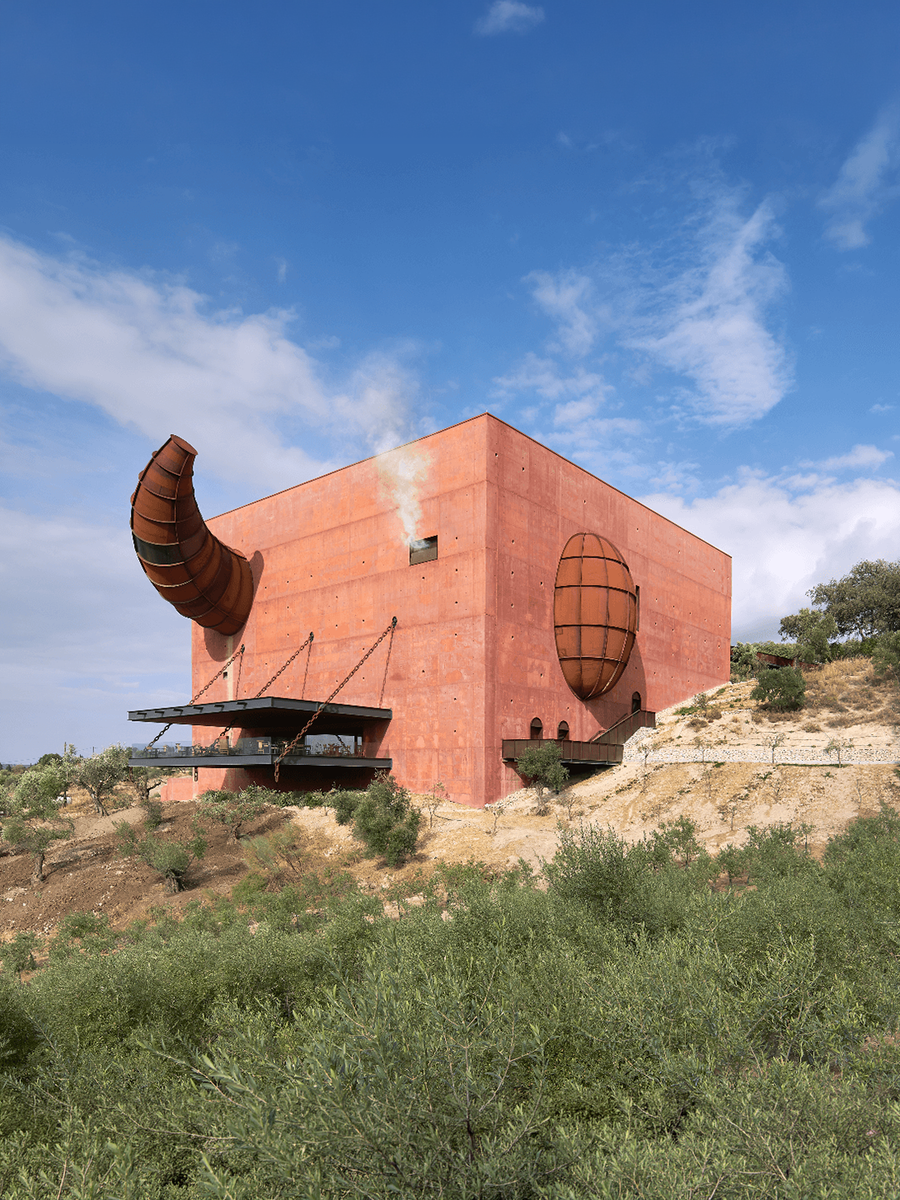
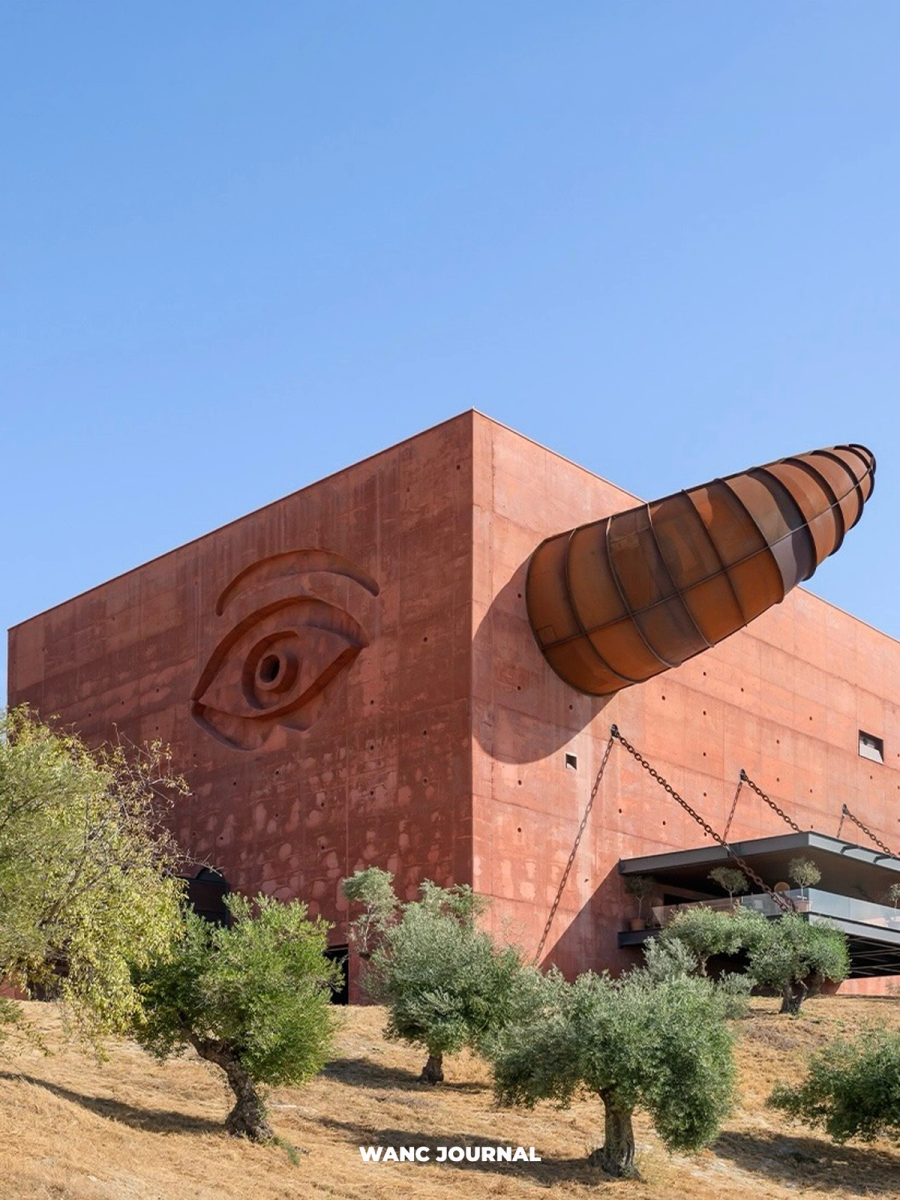
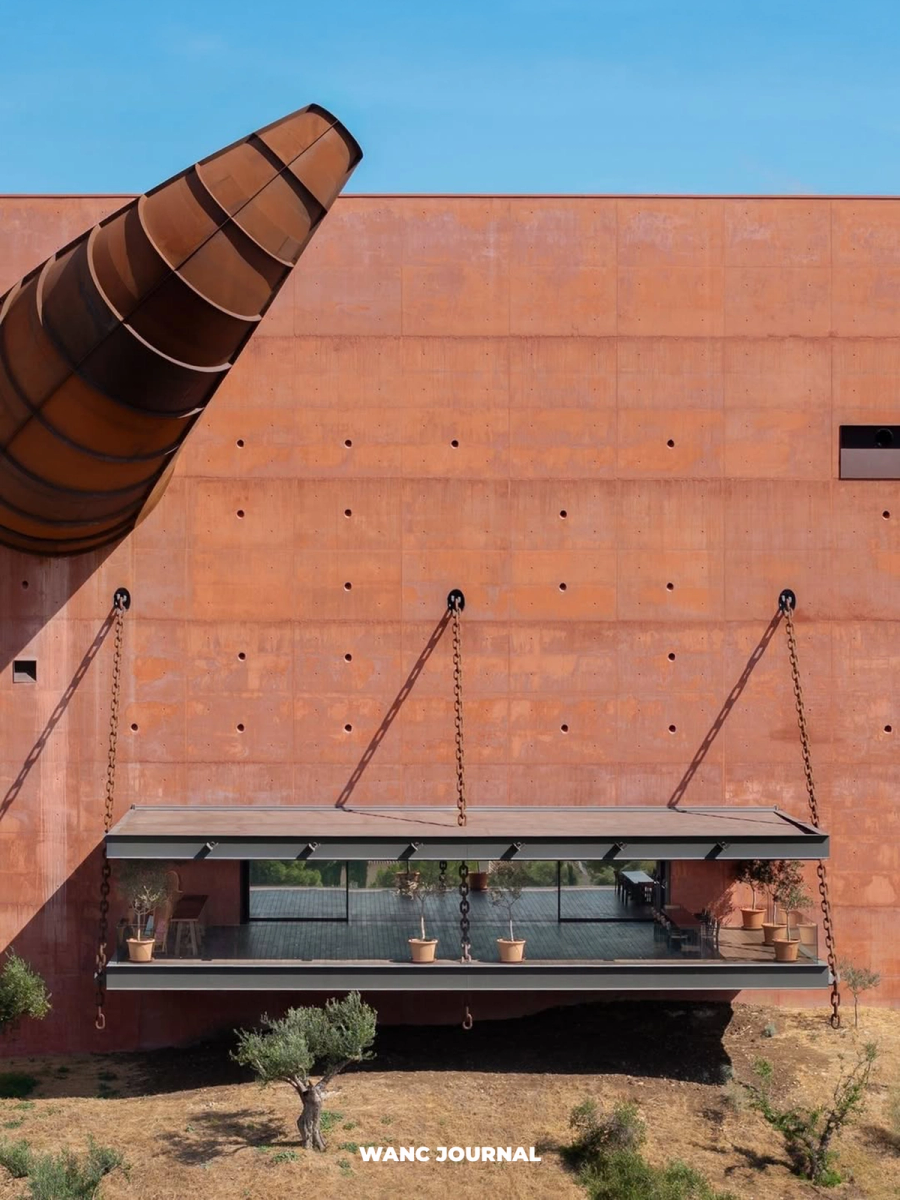
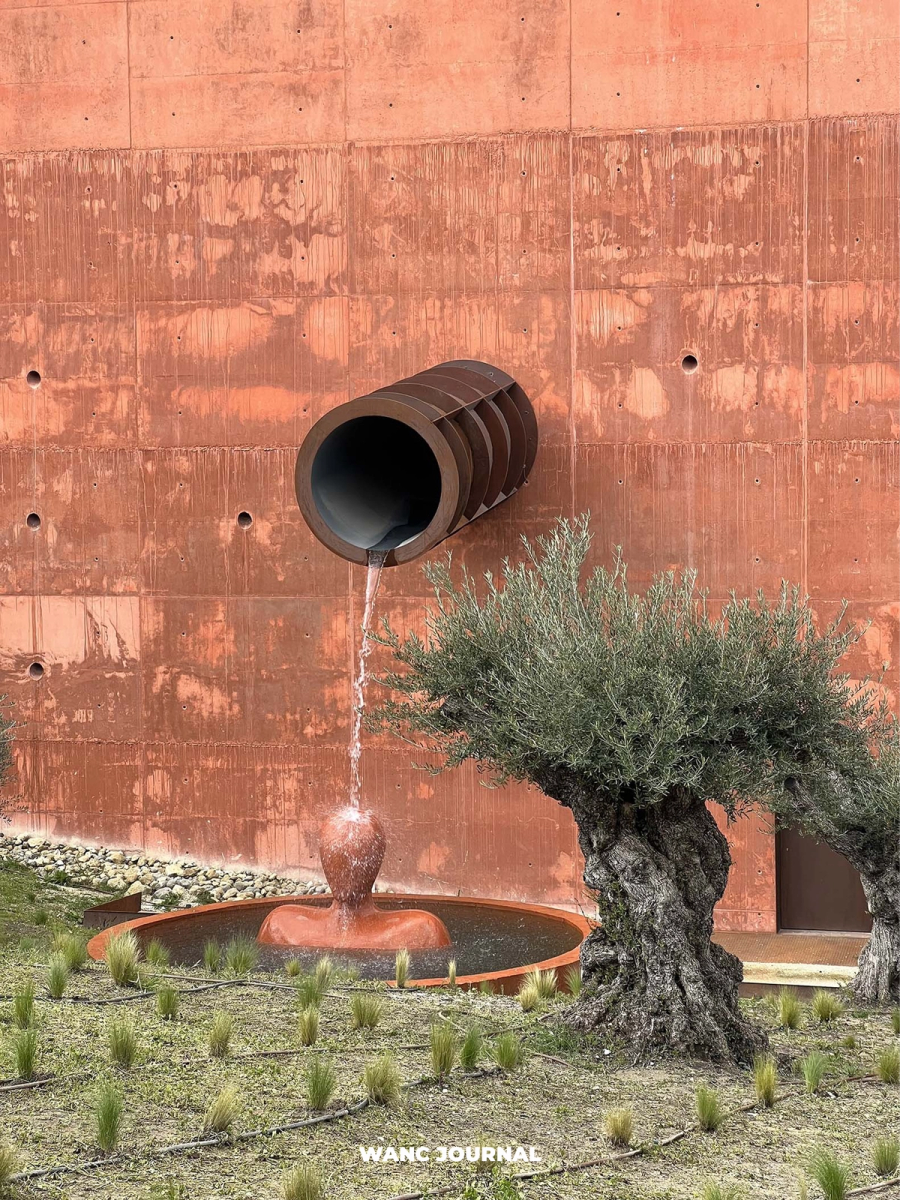
The architectural discourse surrounding Philippe Starck’s latest project in Ronda, Spain ‘‘LA ALMAZARA’’ has largely focused on its surrealist aesthetics and its role in the emerging "oleotourism" sector. Global design authorities have meticulously cataloged its symbolic elements: the monolithic red concrete cube, the immense steel bull’s horn, and the smoke-spitting eye of Goya. However, these analyses remain trapped in the realm of architectural criticism, failing to address the deeper cultural mutation at play. The real question is not how the building looks, but why the most basic element of the Mediterranean olive oil, has been deemed worthy of such a monumental vessel, and what this transformation reveals about the future of consumption.
For decades, wine has enjoyed the privilege of "signature architecture," with titans like Frank Gehry and Santiago Calatrava transforming vineyards into high-art destinations. Olive oil, conversely, has remained a "raw" commodity, essential, accessible, and largely invisible in the pantheon of luxury design. Starck’s LA ALMAZARA shatters this hierarchy. By encasing the production of liquid gold within a monolithic red cube, Starck is not merely designing a mill; he is performing a "Kültürel Teşhis" (Cultural Diagnosis) on the nature of value. This shift represents a fundamental reorganization of desire. When a commodity as humble as olive oil is monumentalized, it signals that the "raw" is no longer enough. To possess value in the modern economy, the ordinary must be aestheticized, curated, and turned into a spectacle.
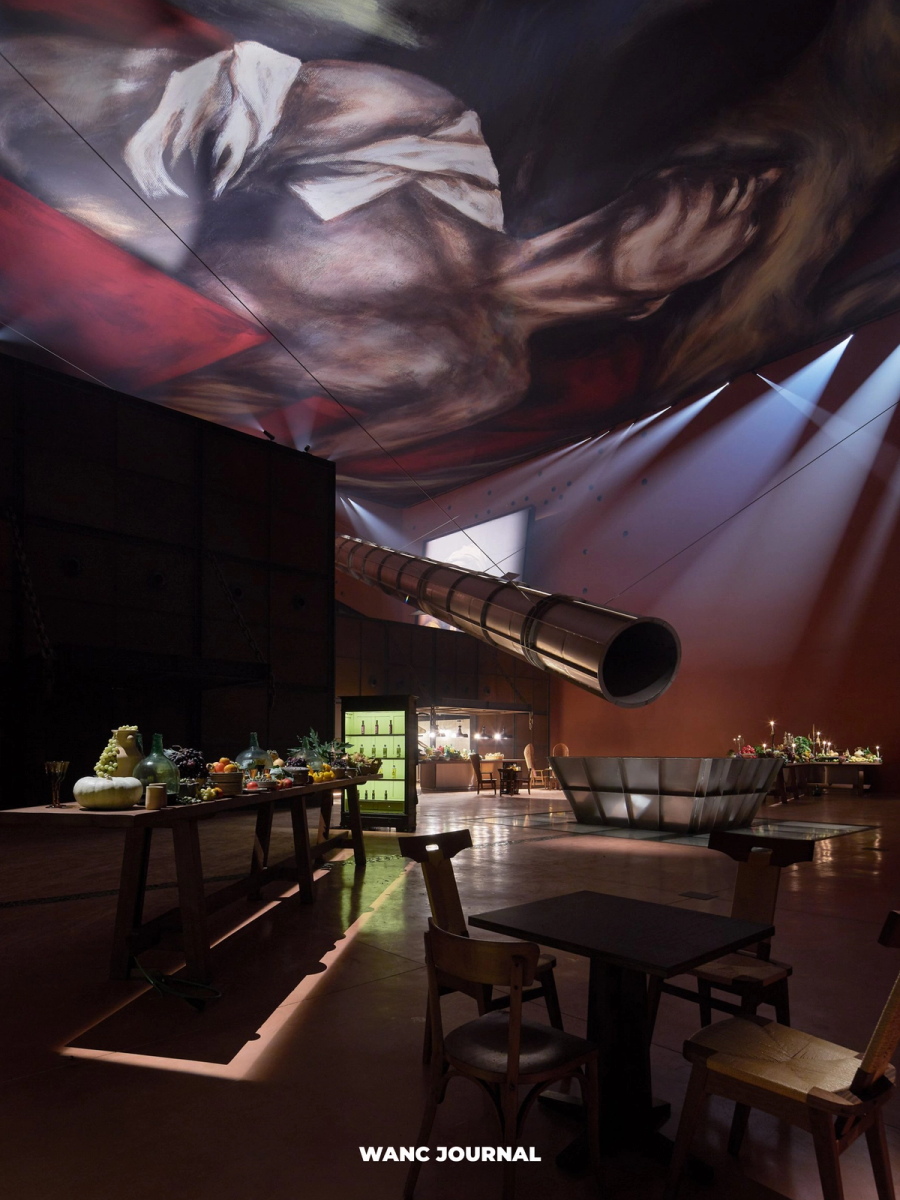
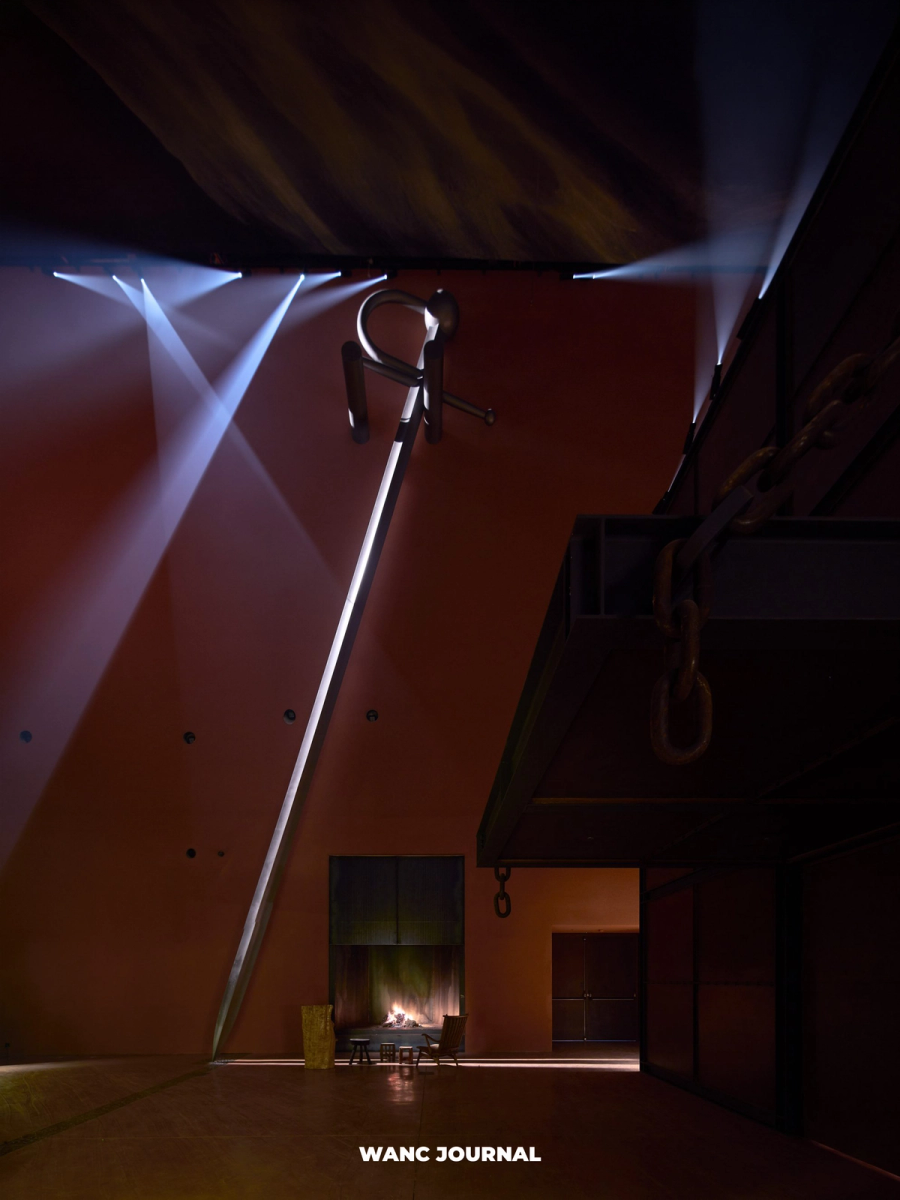
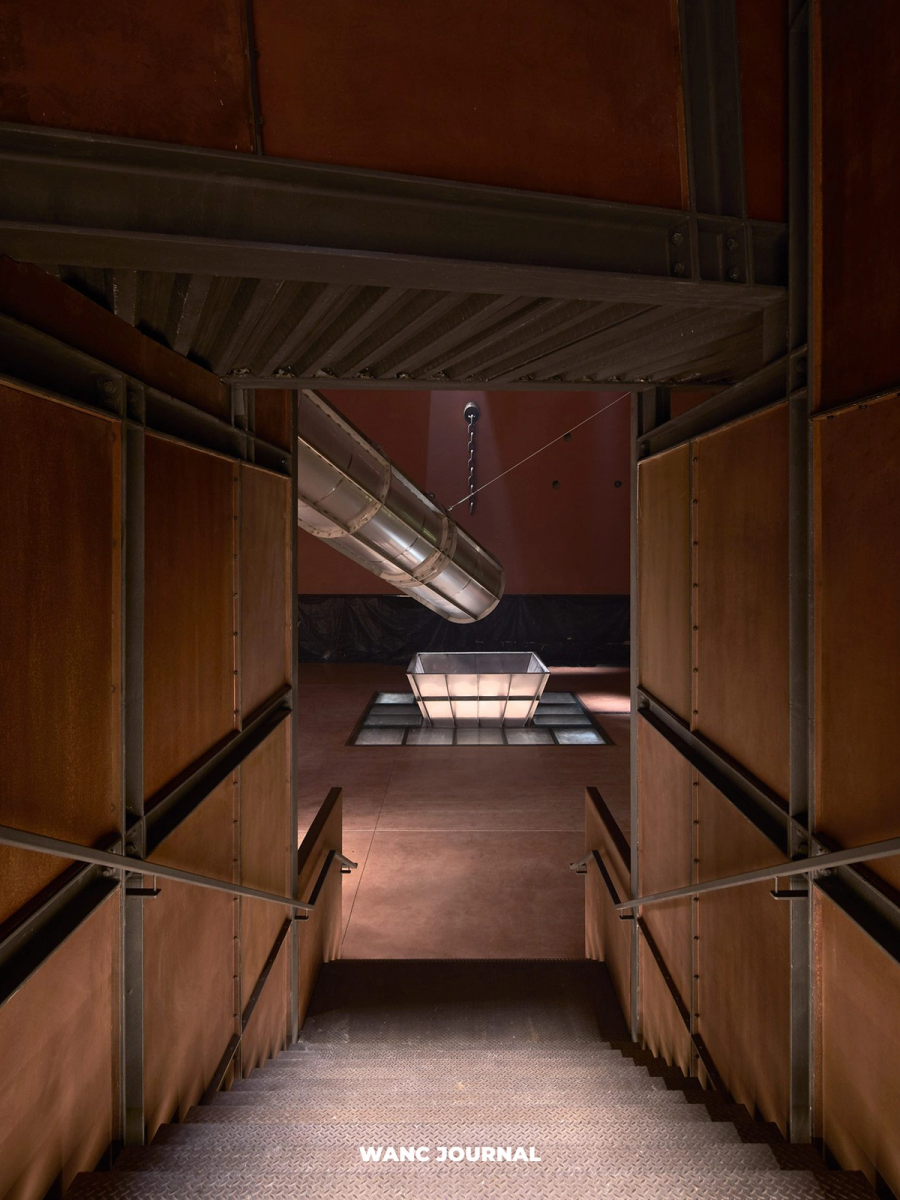
Within the walls of LA ALMAZARA, the act of production is meticulously staged. Visitors observe the pressing and bottling of oil through glass partitions, effectively turning the labor of agriculture into a "lived work of art." This is the "Spectacle of Origin." In the WANC universe, this marks the point where "oleotourism" ceases to be about the product and begins to be about the image of the product. The visitor is no longer a consumer of oil, but a spectator of its birth. Starck’s "poetic functionalism" is, in reality, a strategic weaponization of aesthetics. The building does not just house a mill; it creates a narrative that justifies a new economic tier for olive oil, ensuring that the "raw" remains "sophisticated" enough for the global elite.
Starck claims that LA ALMAZARA is "minimal and timeless, with no superfluous details." Yet, the building is adorned with a giant bull's horn, a headless figure, and a concrete eye that spews black smoke. This is the Starck Paradox. In the WANC framework, this is not minimalism, but a calculated use of "Raw Sophistication."
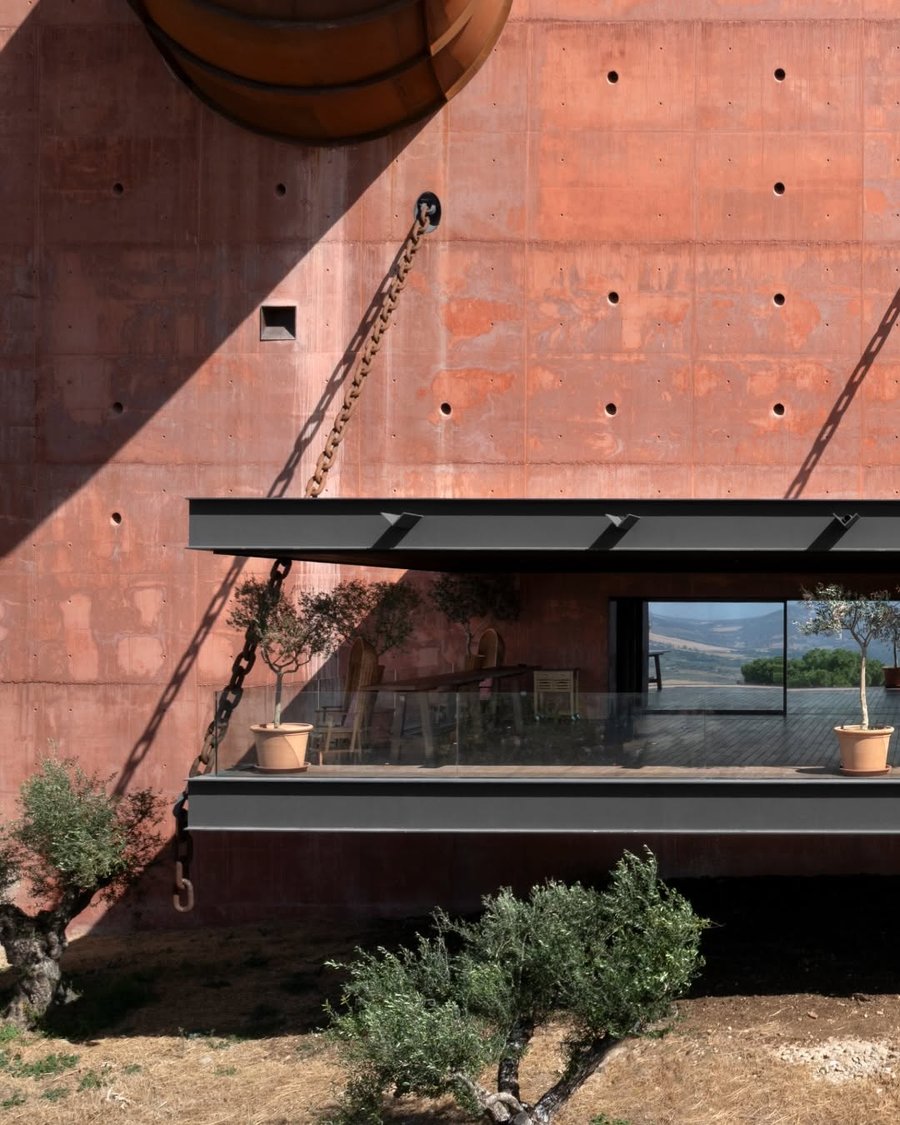
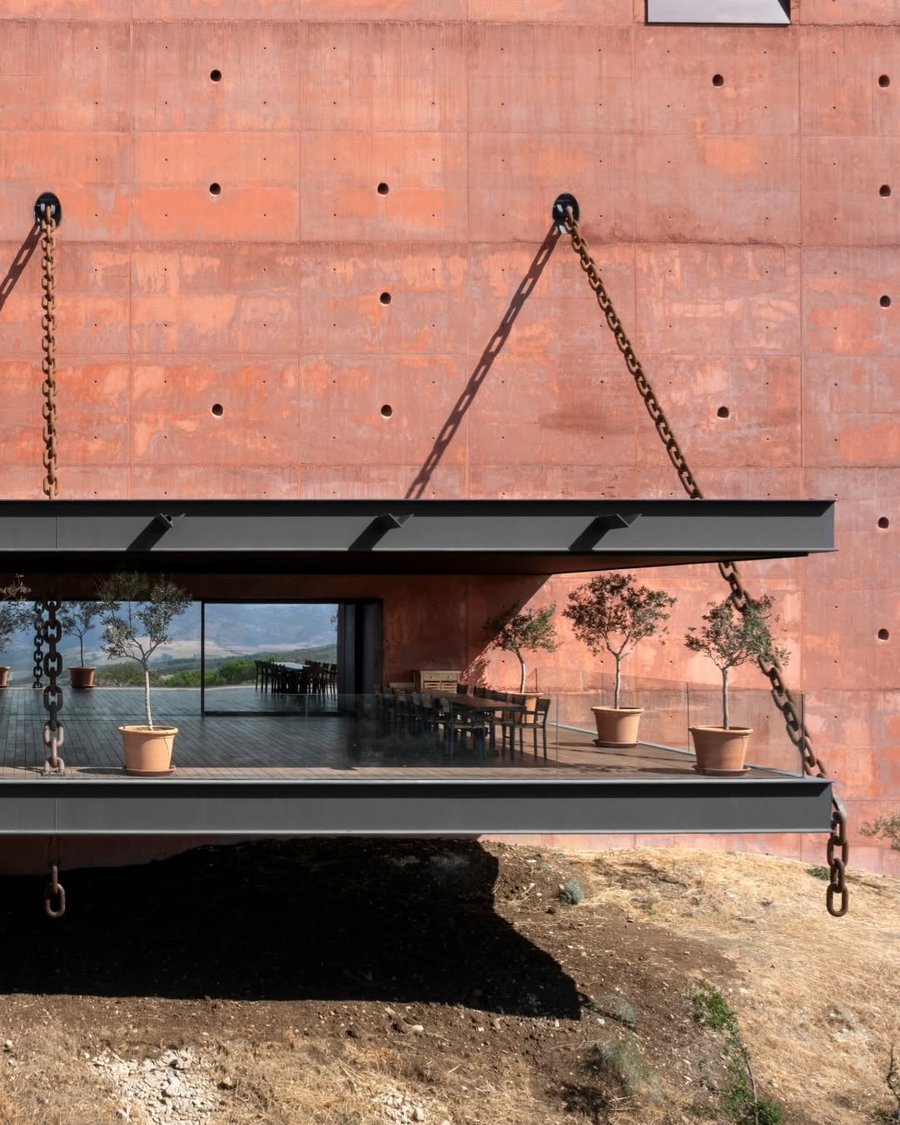
The brutality of the red concrete serves as a canvas for surrealist interventions that demand attention. Starck is not acting as an architect here; he is acting as a "Küratör" (Curator) of symbols. The smoke-spitting eye, a reference to Goya, is perhaps the most telling gesture. It is a literal manifestation of the "gaze" that now defines modern luxury, reminding us that in the age of digital saturation, even the most ancient processes must perform to be seen.
THE STRATEGIC INSIGHT
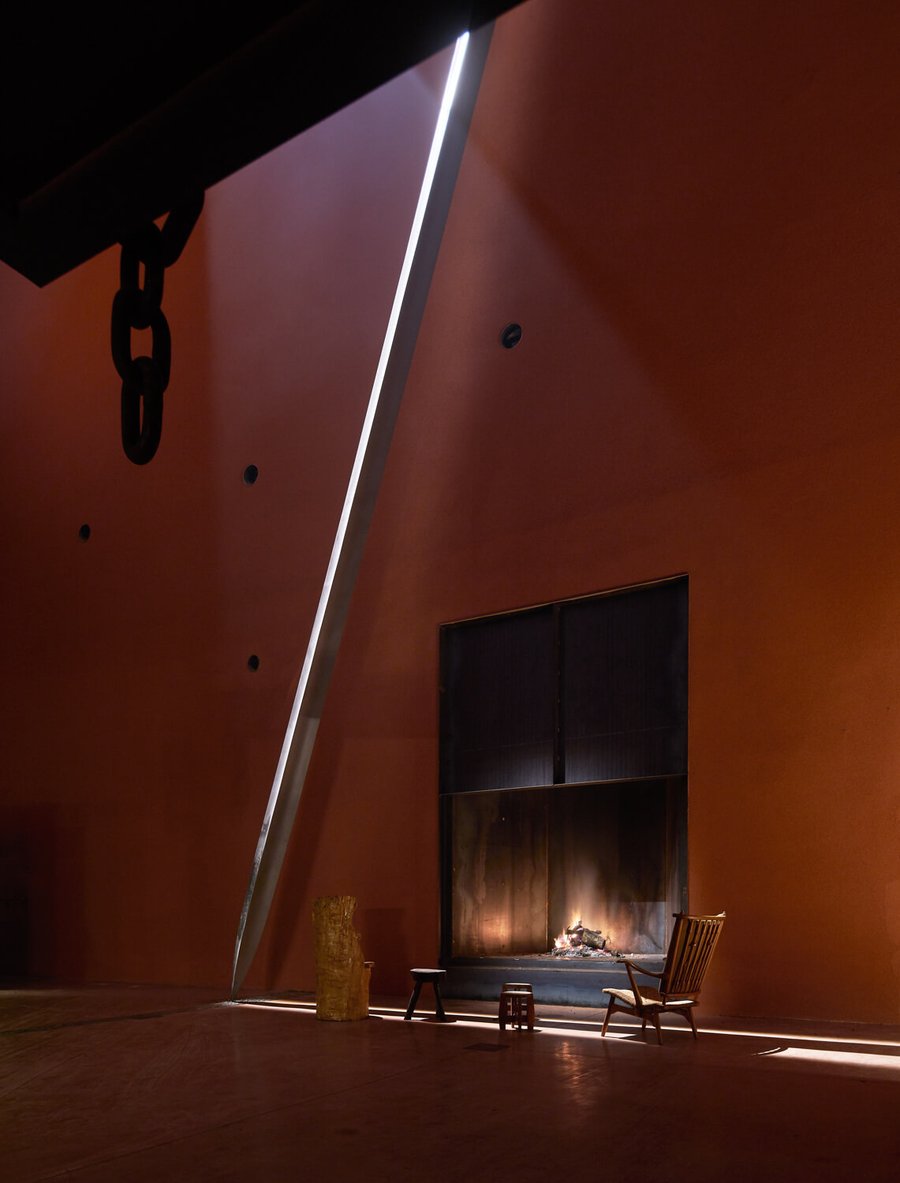
The transition from "Mill" to "Museum" marks the death of the invisible commodity. By monumentalizing the olive oil production process, Starck has successfully transitioned a functional agricultural product into a Cultural Artifact. This is the core of our "Kültürel Teşhis" (Cultural Diagnosis): In an era of digital saturation, value is no longer found in the product itself, but in the Spectacle of its Origin.When we analyze LA ALMAZARA through the lens of Material Intelligence, we see a calculated use of Raw Sophistication. The brutalist red concrete cube acts as a physical barrier that filters out the "ordinary," allowing only the "curated" to emerge. Starck is not merely an architect here; he is a Strategic Architect of Desire, ensuring that the gaze of the global elite is captured by the performance of production.
WANC PERSPECTIVE
For the creative and media industries, LA ALMAZARA serves as a blueprint for the future of branding. It proves that any "raw" element can be elevated through the correct application of conceptual maximalism and strategic curation. At WeAreNotCreative, we don't just see a mill; we see the future of how brands must occupy physical space to remain relevant in a world that values the story over the substance.
Photos: Alfonso Quiroga Ferro, Dani Vottero
Sonraki Yazı
The Ghost Record: GucciCore, verxx33, and the Censored Mutation
Okumaya Devam Et

essay