essay — 06.09.2026
KOŞUNUN MATERYAL HAFIZASI
Tarih06.09.2026
Koşu kıyafetlerinin çoğu kendilerini geleceğe ait göstermek ister; Satisfy’nin Paris’te açtığı iki yeni adres ise bu geleceği geçmişin malzemeleriyle kuruyor. Rue de Saintonge’daki Supply ve Fuel Station, teknik giysileri, eski plakları, ham yüzeyleri, kahveyi ve elektrolitleri aynı koşu anlatısının içine yerleştiriyor. İki kapı arasındaki kısa mesafe, performansın yalnızca bedende değil, onu hazırlayan maddi çevrede de başladığını gösteriyor.
SATISFY SUPPLY & FUEL STATION
Koşu kıyafetlerinin çoğu, kendilerini geleceğe ait göstermek ister. Hafif kumaşlar, teknik yüzeyler, hava alan katmanlar, bedenle birlikte çalışan dikişler. Satisfy’nin Paris’te açtığı iki yeni alan ise bu geleceği kurarken geçmişin malzemelerine dönüyor.
Rue de Saintonge’da karşılıklı duran iki kapı var. 47 numarada Satisfy Supply, 54 numarada Satisfy Fuel Station. İki alan, markanın Paris’teki ilk kalıcı mekânları. Supply’da teknik giysiler, ayakkabılar ve koşu ekipmanları; Fuel Station’da işlevsel kahve, elektrolitler, performans beslenmesi ve doldurulabilir flask’lar bulunuyor. Supply her gün 11.00–19.00, Fuel Station ise 08.00–16.00 arasında açık.
İki dükkânın arasındaki birkaç metre, Satisfy’nin koşu fikrini açıklamaktan çok onu fiziksel hâle getiriyor. Koşu yalnızca ayakkabı giyilip dışarı çıkıldığında başlamıyor. Bedenin hazırlanması, suyun doldurulması, cebin kontrol edilmesi, kahvenin bitirilmesi ve nereye kadar gidileceğine karar verilmesi de bu sürenin içinde. Satisfy, bütün bu anları aynı çatı altında birleştirmek yerine iki ayrı adrese yayıyor.
Bu karar, mağazayı bir vitrin olmaktan çıkarıp koşunun çevresindeki küçük alışkanlıklarla ilişkilendiriyor. Supply geçmişi topluyor. Fuel Station bedeni ileri gönderiyor. Aralarındaki sokak ise bu ikisi arasındaki kısa ama gerekli zamanı taşıyor.
I. HAZIRLIK VE PERFORMANS ARASINDAKİ SOKAK
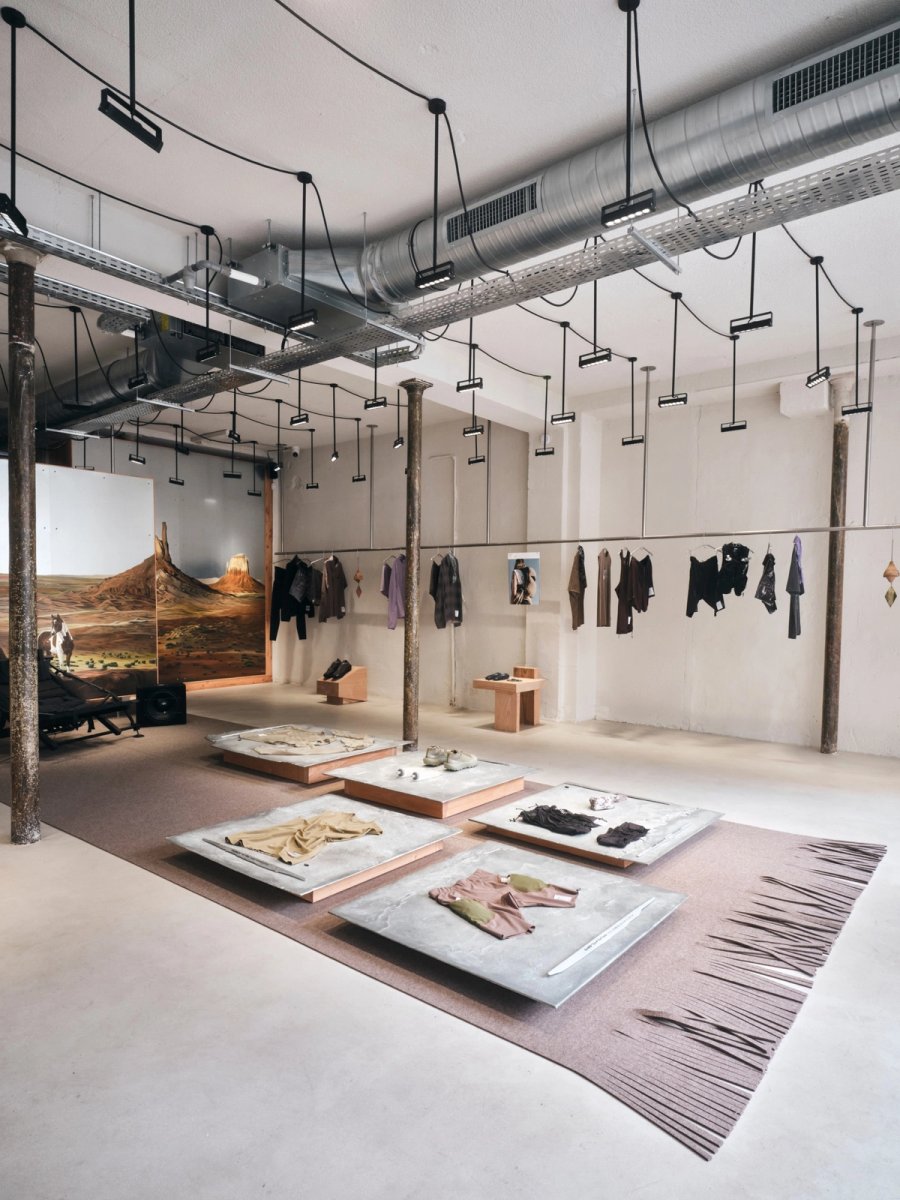
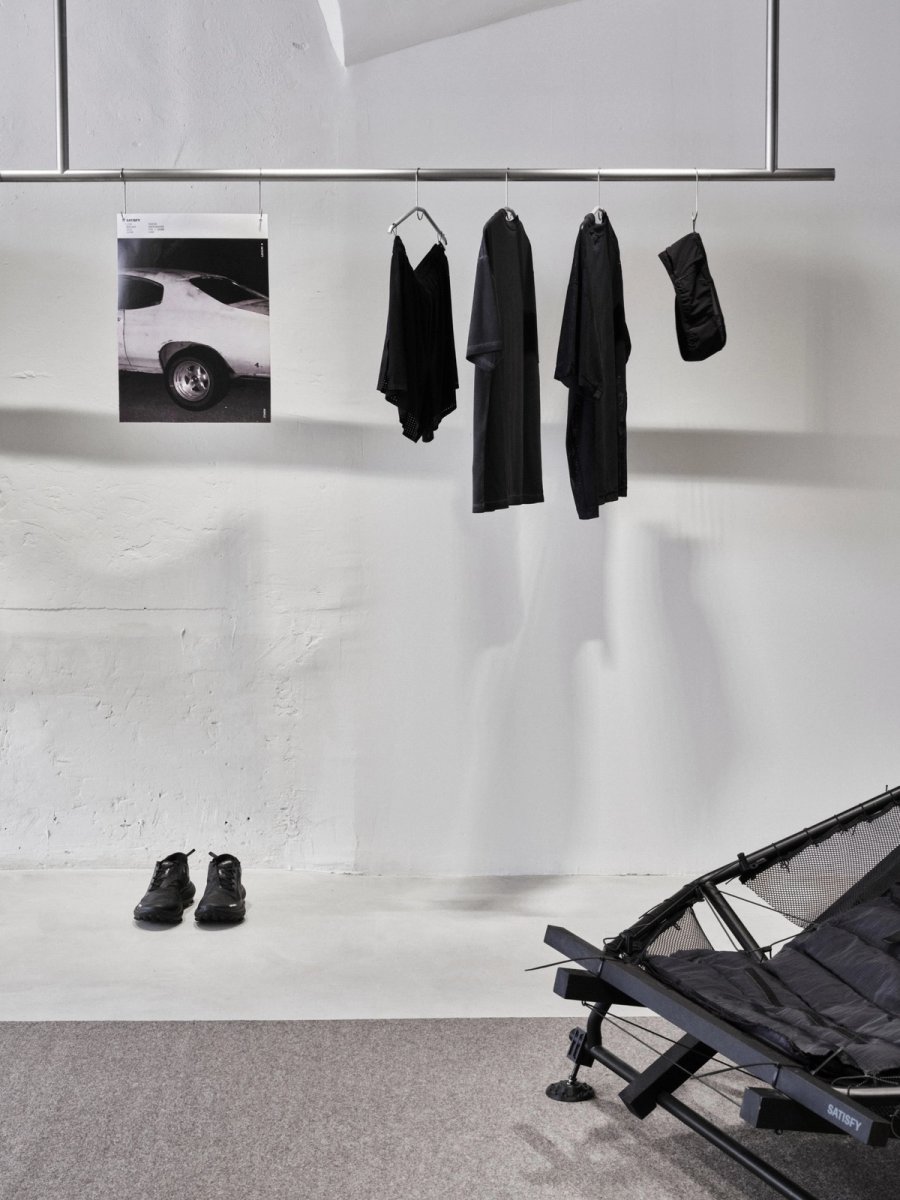
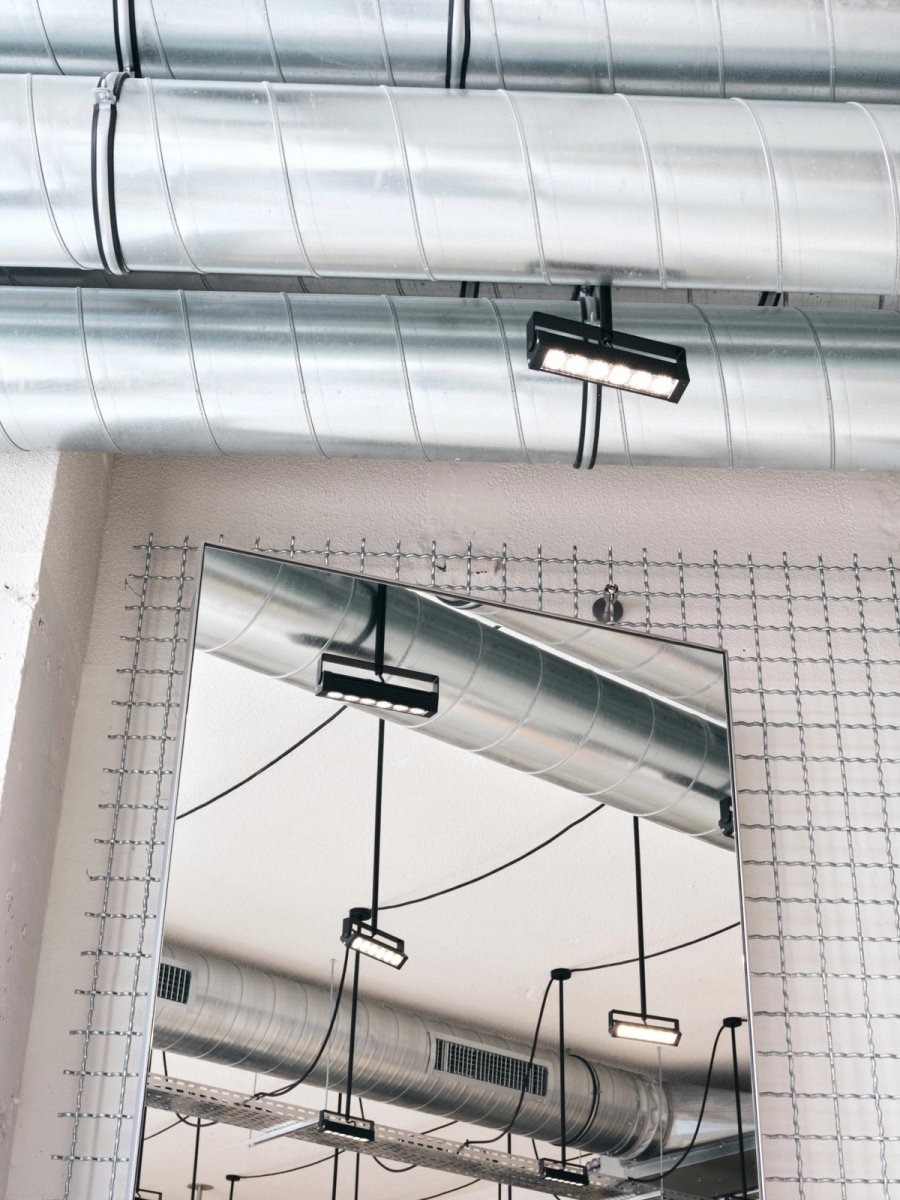
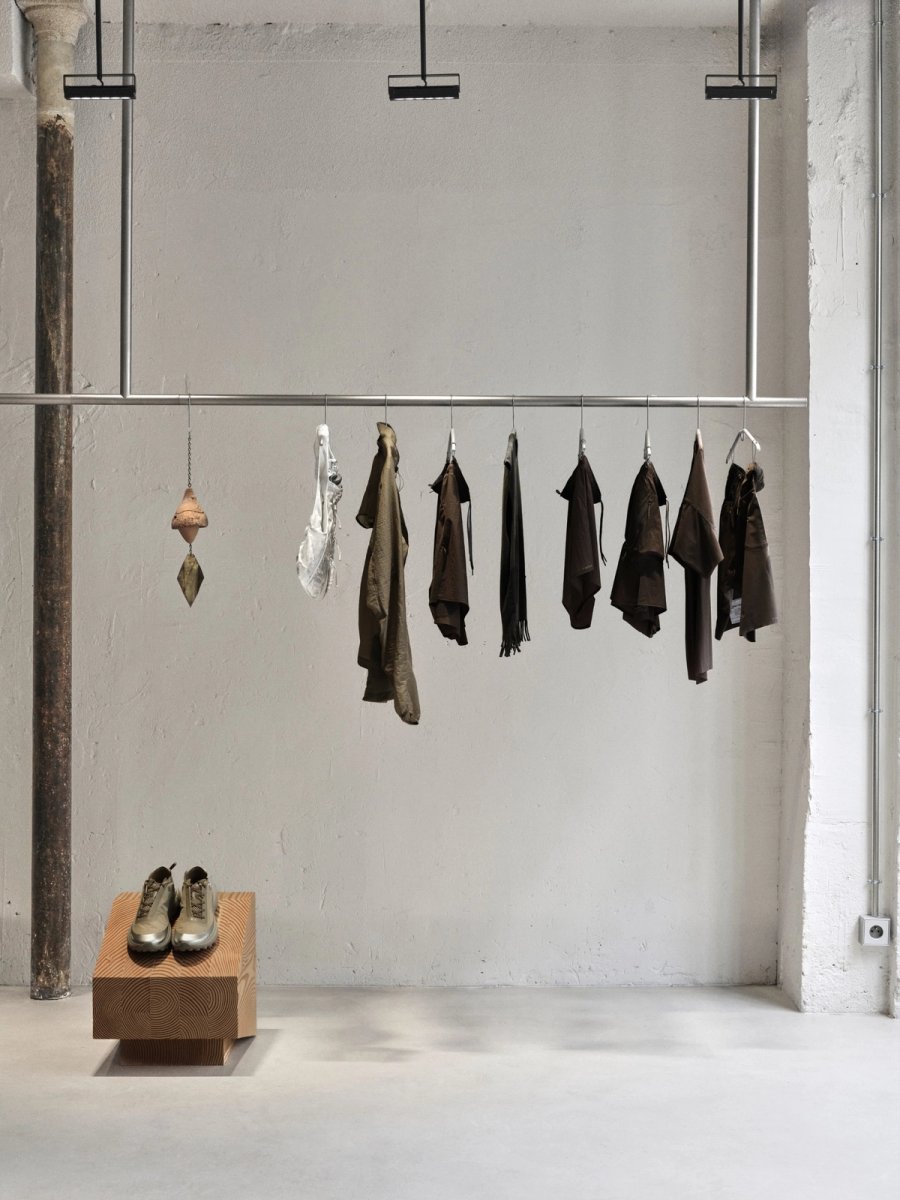
Supply’ın içine girildiğinde, teknik giysilerin beyaz ve kusursuz bir zeminde sergilendiği alışıldık spor mağazası görüntüsüyle karşılaşılmıyor. Binanın eski izleri yumuşak gri duvarların altında görünür kalıyor. Borular saklanmıyor. Douglas köknarı, yün keçe, beton, tel örgü, paslanmaz çelik ve döküm zamak aynı mekânda yan yana geliyor. Tasarım, bu malzemeleri tek bir pürüzsüz yüzeye dönüştürmek yerine aralarındaki farkı koruyor.
Bu fark önemli. Beton mekâna ağırlık veriyor. Tel örgü raf ile duvar arasında geçirgen bir sınır kuruyor. Douglas köknarı sert yüzeylerin arasına daha sıcak bir zaman duygusu yerleştiriyor. Yün keçe sesi ve teması yumuşatıyor. Paslanmaz çelik ile döküm zamak ise işlevsel, endüstriyel ve biraz da atölye kökenli bir dünya çağırıyor.
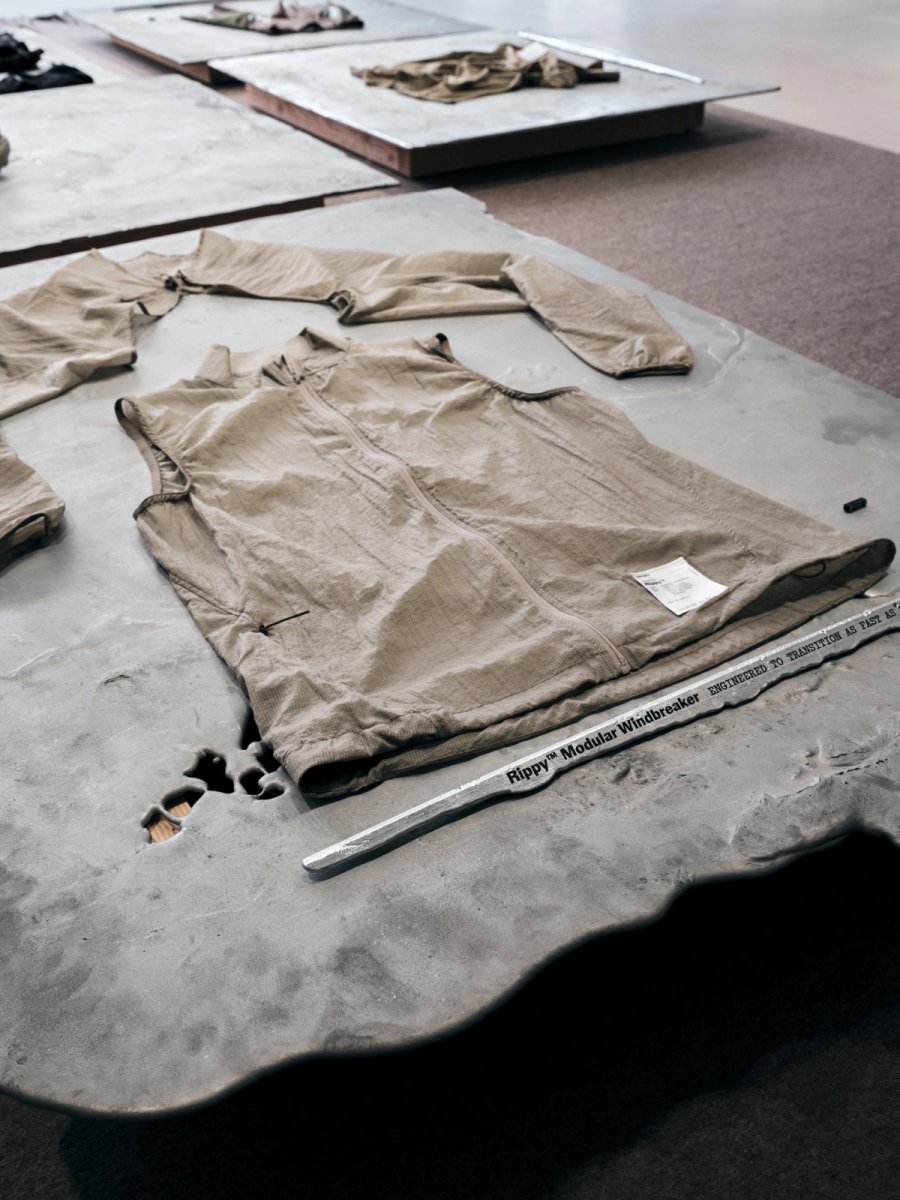
Burada Material Intelligence, malzemenin yalnızca nasıl göründüğüyle ilgili değil; mekânda ne yaptığıyla ilgili. Bir yüzeyin sergileme alanı olması, bir rafın taşıması, bir borunun saklanmak yerine görünür kalması, ürünlerin nasıl algılanacağını belirliyor. Satisfy’nin teknik giysileri de bu nedenle yalnızca yüksek performans nesneleri gibi görünmüyor. Ham yüzeylerin arasında, teri, sürtünmeyi ve dışarıdaki hava koşullarını hatırlatan gündelik araçlara dönüşüyorlar.
Tasarım stüdyosu ciguë, mekânın mevcut yapısını tamamen silmek yerine onun izleriyle çalışıyor. Bu yaklaşım, koşunun kendisine de yakın. Koşu her seferinde sıfırdan başlamıyor; ayakkabının tabanında, kumaşın tuz izinde, bedendeki yorgunlukta ve aynı rotaya tekrar dönme isteğinde bir önceki koşudan parçalar taşıyor.
II. MATERIAL MEMORY: BİR KOŞU MAĞAZASININ GEÇMİŞİ
Supply’ın malzemeleri geçmişe ait bir dekor oluşturmak için seçilmemiş. Daha çok, başka kullanım alanlarından gelen hafızaları aynı odada buluşturuyorlar. Tel örgü depo raflarını, karton kutular servis alanlarını, otomobil halısı garajları, açıkta kalan borular atölyeleri hatırlatıyor. Satisfy bu hafızaları teknik koşu giysileriyle yan yana koyuyor.
Bu nedenle Supply’ın dünyası parlak bir spor mağazasının geleceğinden çok, çalışma hayatının eski görüntüleriyle ilişki kuruyor. Koşu, steril bir performans alanından çıkarılıp toz, metal, kablo, ses ve tekrarın bulunduğu daha fiziksel bir çevreye geri dönüyor. Material Memory burada malzemenin yaşlanmış görünmesi anlamına gelmiyor. Malzemenin daha önce nerelerde bulunduğunu ve şimdi hangi davranışı taşıdığını hatırlamak anlamına geliyor.
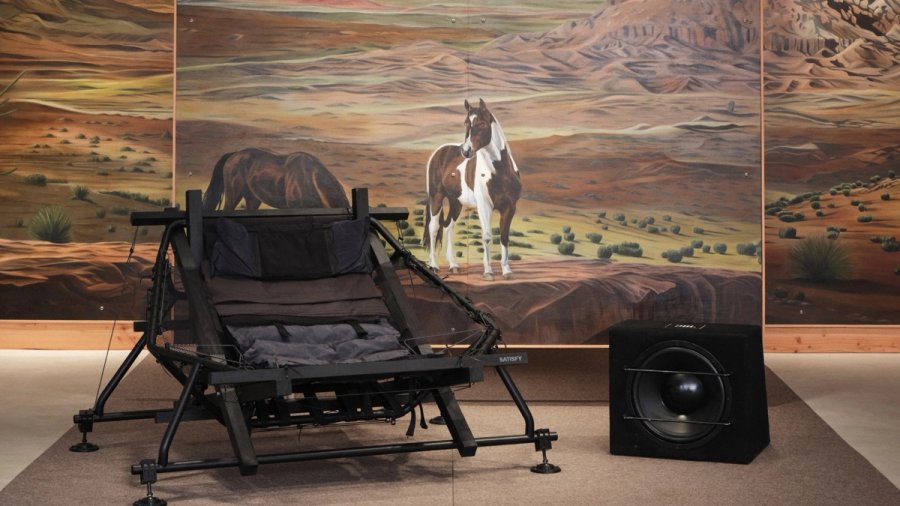
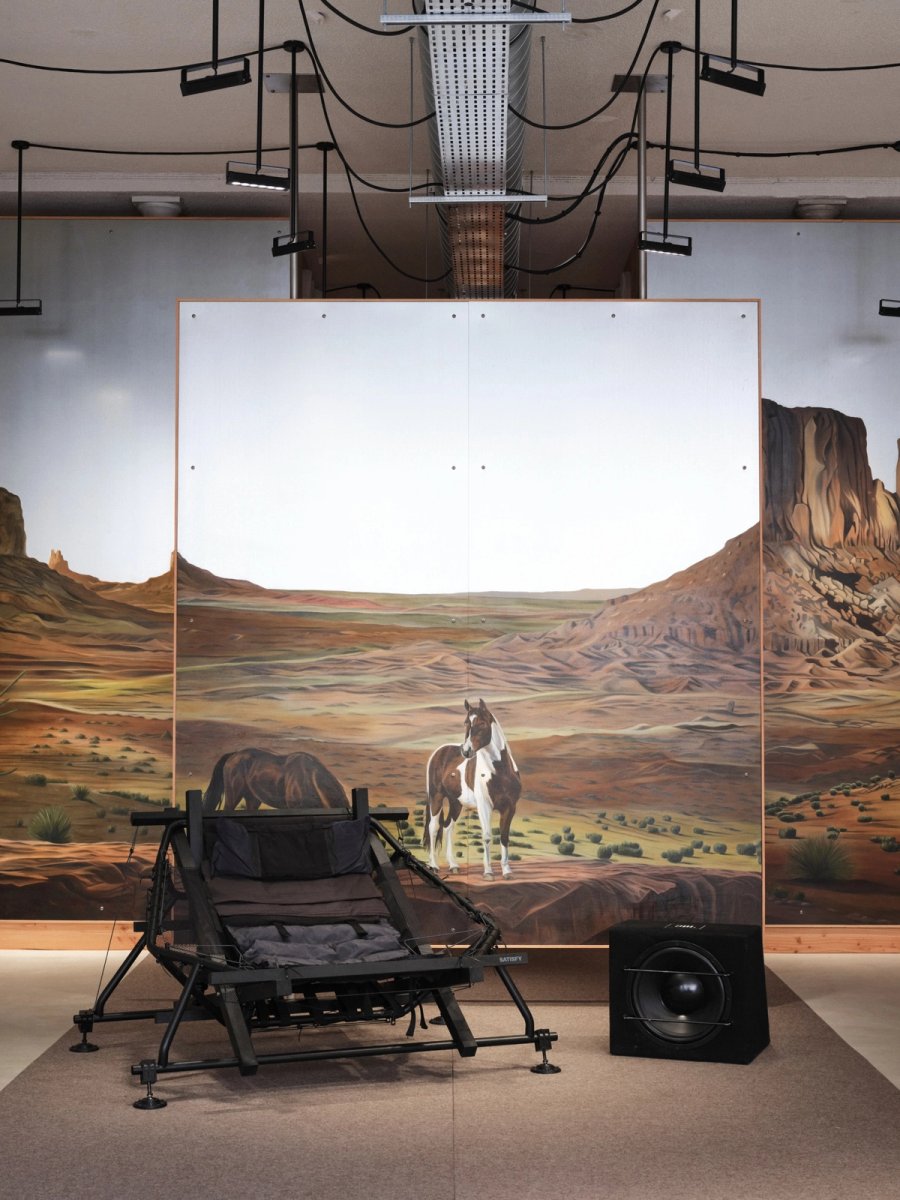
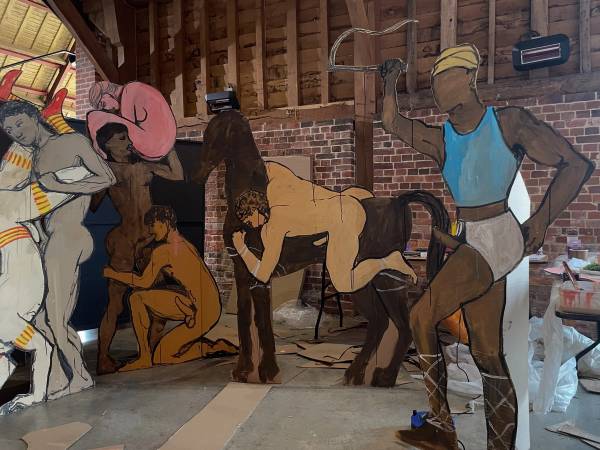
Mekânın ortasında New Yorklu sanatçı Othelo Gervacio’nun üç parçalı büyük yağlıboyası yer alıyor. Doğal tarih dioramaları ve American West gerçekçiliğinden beslenen çalışma, koşu giysilerinin yanında beklenmedik bir ölçek yaratıyor. Jean-Baptiste Durand’ın özel yapım koltuğu, otomobil halısıyla kaplanmış ikinci el bir tuning-car subwoofer’ı, eski dergiler, mücevherler ve punk plakları da aynı çevrenin parçası.
Bir koşu tişörtünün yanında Minor Threat plağı durduğunda, iki nesne birbirini açıklamak zorunda kalmıyor. Aralarındaki mesafe zaten yeterince şey söylüyor. Satisfy’nin koşucusu yalnızca kilometre biriktiren bir beden değil; müzik dinleyen, eski nesneler toplayan, ses sistemlerine bakan, oturduğu koltuğu önemseyen ve kıyafetini şehirde de kullanmak isteyen biri.
Bu, markanın koşu kültürü fikrini genişletme biçimi. Koşucuya yeni bir kimlik vermekten çok, onun zaten sahip olduğu çelişkileri bir arada tutuyor: disiplin ve dağınıklık, teknik ihtiyaç ve estetik arzu, yalnız kalma isteği ve şehirde görünür olma arzusu.
III. FUEL STATION VE DEVAM ETMENİN FİZİĞİ
Karşıdaki Fuel Station, Supply’ın topladığı geçmişi başka bir düzleme taşıyor. Burada çelik raflar, karton kutular ve tel örgü yüzeyler daha hızlı, daha pratik bir düzen kuruyor. Su ve elektrolitler flask’lara, kemerlere ve hız bardaklarına doldurulabiliyor. Deniz yosunu bazlı bir jel mekânda üretiliyor; mantarlar da içeride yetiştiriliyor.
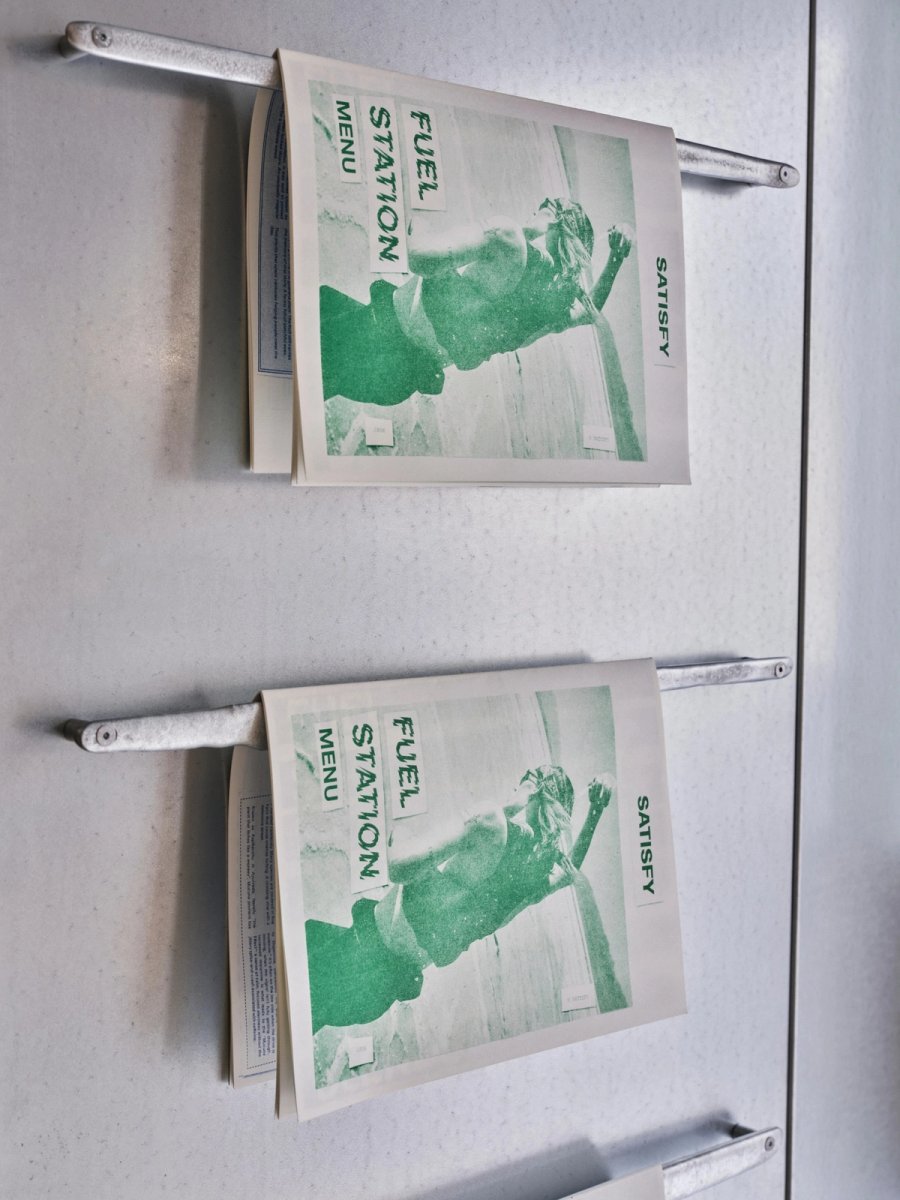
Fuel Station’ın adı bir benzetmeden fazlasını taşıyor. Benzin istasyonunda araç durur, yakıt alır ve tekrar yola çıkar. Burada motorun yerini beden alıyor. Kahve, elektrolit, su ve jel; koşudan önce hesaplanan küçük bir enerji ekonomisinin parçaları hâline geliyor.
Bu mekânda materyal hafıza daha gündelik bir biçimde ortaya çıkıyor. Karton kutu depolamayı, çelik raf düzenlemeyi, dolum yüzeyi tekrar tekrar kullanılmayı, flask ise hareketi hatırlatıyor. Hiçbiri uzun süre bakılmak için tasarlanmamış. İşlevleri, ellerin ve bedenin içinden geçerek tamamlanıyor.
Supply’da bir ürünün çevresinde durup ona bakıyoruz. Fuel Station’da aynı ürünün ne zaman açılacağını, ne kadar tüketileceğini ve ne kadar süre taşıyacağını düşünüyoruz. Bu iki mekân arasındaki fark, estetik ile kullanım arasındaki basit bir ayrım değil; nesnenin zamana nasıl yerleştiğiyle ilgili.
Satisfy’nin kurucusu ve kreatif direktörü Brice Partouche, markanın daha geniş bir kitle için değil, kendi koşu anlayışı için tasarlandığını söylüyor. Highsnobiety’nin aktardığı bu yaklaşım, mağazaların neden herkese kendini açıklamaya çalışmadığını da gösteriyor. Satisfy’nin dünyası hazır bir yaşam tarzı paketi sunmuyor; malzemeleri, sesleri, kıyafetleri ve ritüelleri yan yana getirerek kendi mantığını kuruyor.
WANC JOURNAL ÖZEL NOTU
Satisfy’nin Paris’te açtığı iki alanın asıl konusu koşu kıyafetleri değil. Konu, performansın çevresinde biriken maddi hayat.
Bir koşucu yola çıkmadan önce yalnızca üstünü değiştirmiyor. Kendi ağırlığını, suyunu, sesini, sıcaklığını ve dikkatini ayarlıyor. Supply bu ayarın kültürel tarafını topluyor: yağlıboya, plak, dergi, koltuk, otomobil halısı, metal, ahşap ve ham duvar. Fuel Station ise ayarı bedensel hâle getiriyor: su, kahve, elektrolit, jel, flask ve kısa bir durak.
Bu yüzden iki mağaza arasındaki sokak, basit bir geçiş alanı olarak kalmıyor. Orada Satisfy’nin bütün tasarım fikri birkaç saniyeliğine görünür oluyor. Bir tarafta nesneler geçmişten taşıdıkları ağırlıkla duruyor. Diğer tarafta aynı beden, bu ağırlığı alıp ileriye taşıyacak kadar hazırlanıyor.
Satisfy’nin Material Intelligence’ı, teknik bir kumaşın performansında olduğu kadar, eski bir plakla yeni bir koşu tişörtünün aynı odada bulunabilmesinde de yatıyor. Material Memory ise betonun, tel örgünün, kartonun, otomobil halısının ve açıkta kalan boruların taşıdığı eski hayatların, koşunun bugünkü diline karışmasında.
Marka burada koşuyu geleceğe ait bir spor olarak pazarlamıyor. Onu geçmişin malzemeleriyle, bugünün bedenleriyle ve her sabah yeniden başlayan küçük hazırlıklarla kuruyor.
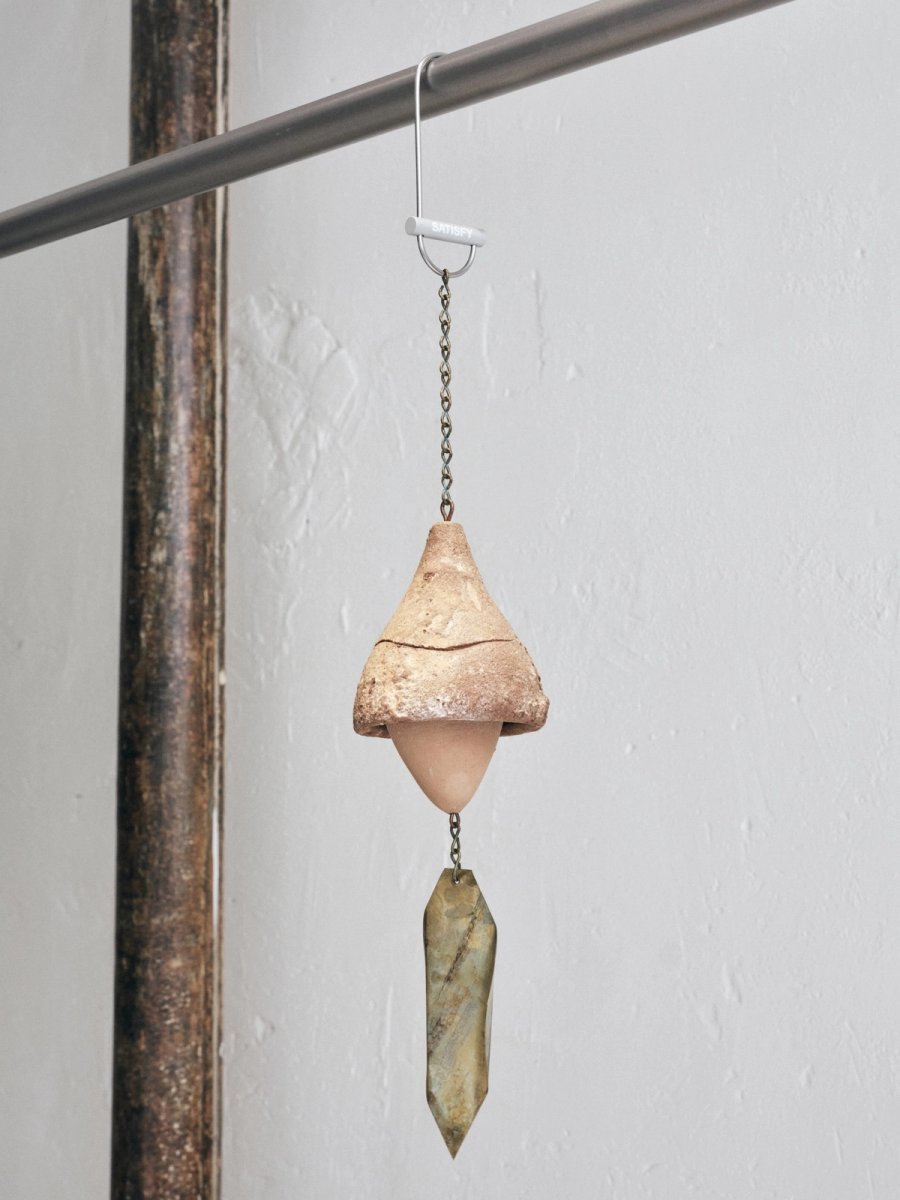
THE MATERIAL MEMORY OF THE RUN
SATISFY SUPPLY & FUEL STATION
Most running clothes want to look as if they belong to the future. Lightweight fabrics, technical surfaces, breathable layers, seams that move with the body. In Paris, Satisfy has opened two new spaces that build this future through the materials of the past.
Two doors face each other on rue de Saintonge. At number 47: Satisfy Supply. At number 54: Satisfy Fuel Station. They are the brand’s first permanent Paris locations. Supply holds technical clothing, shoes, and running equipment; Fuel Station offers functional coffee, electrolytes, performance nutrition, and refillable flasks. Supply is open from 11:00 to 19:00, while Fuel Station operates from 08:00 to 16:00.
The few metres between the two shops make Satisfy’s idea of running physical. A run does not begin the moment shoes are put on and the door is left behind. Preparing the body, filling the water bottle, checking the pockets, finishing a coffee, deciding how far to go: these moments belong to the run as well. Satisfy has spread them across two addresses rather than compressing them under one roof.
The decision turns the shop into a place connected to the small habits surrounding a run. Supply gathers the past. Fuel Station sends the body forward. The street between them carries the short but necessary time between the two.
I. THE STREET BETWEEN PREPARATION AND PERFORMANCE
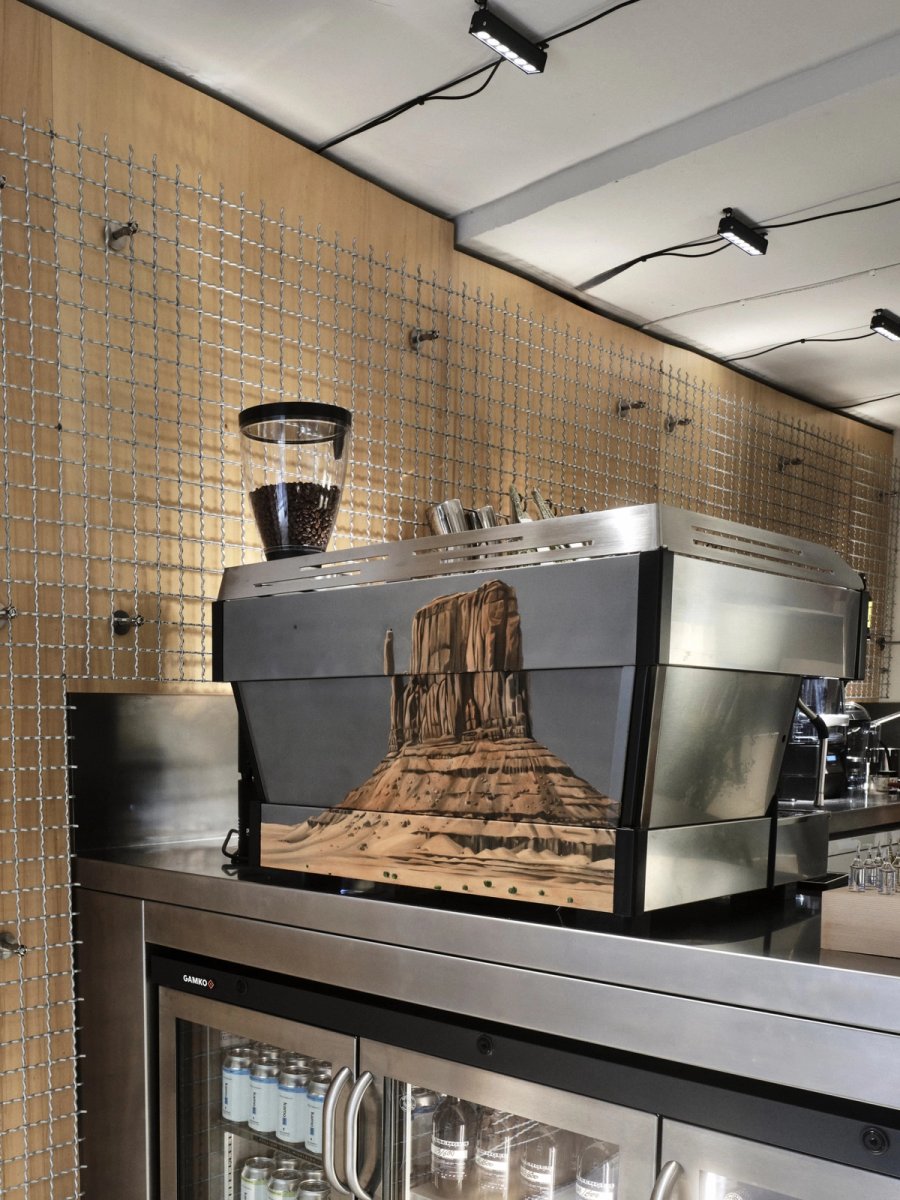
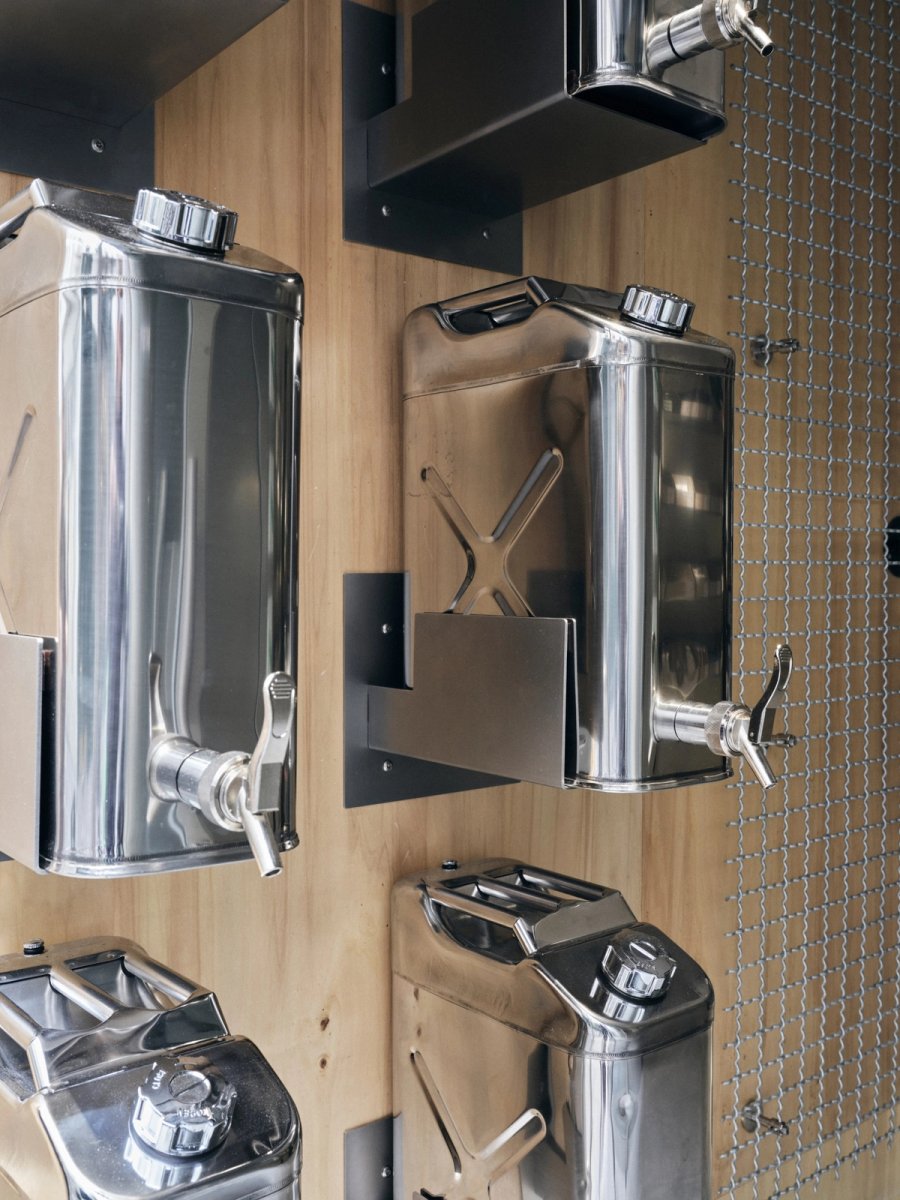
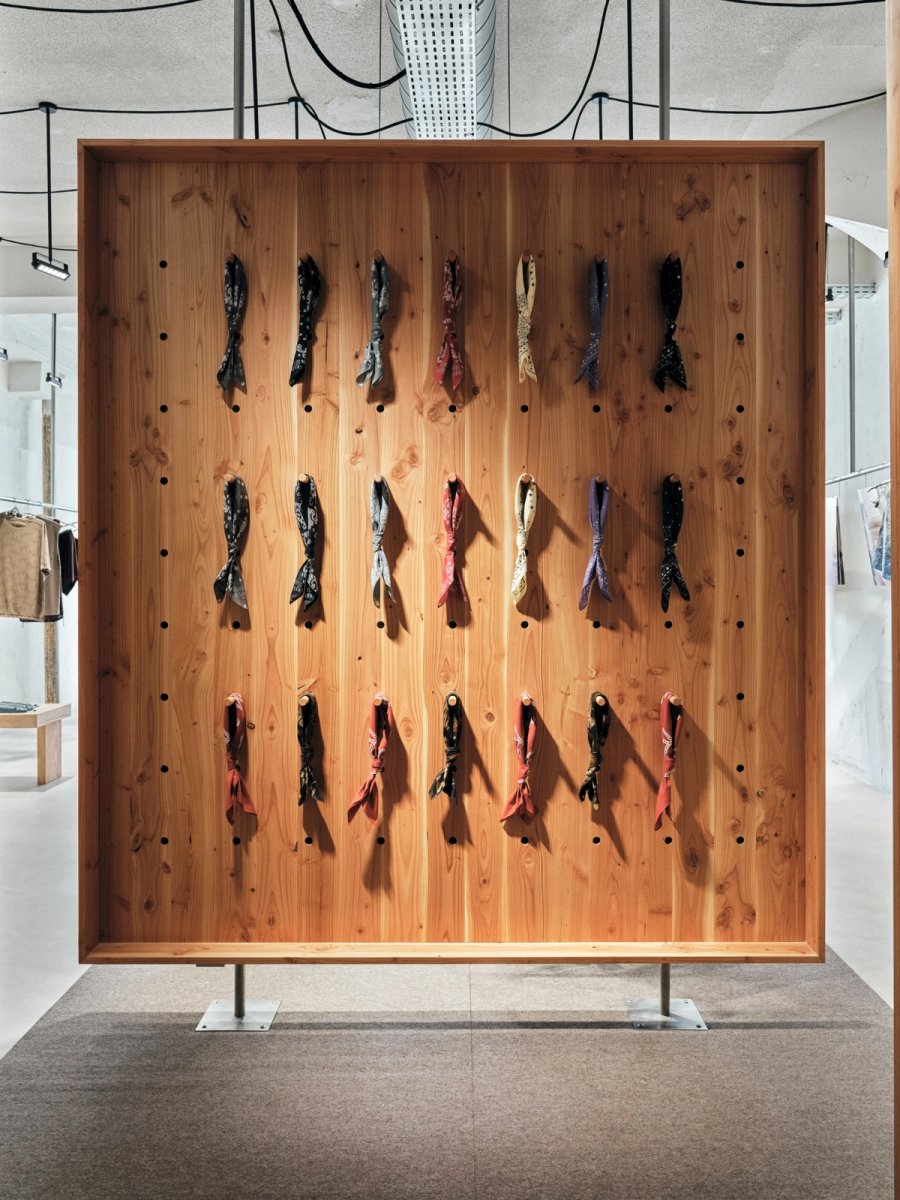
Inside Supply, technical clothing is not displayed against the immaculate white background of a conventional sports store. The building’s older traces remain visible beneath soft grey walls. Pipes are left exposed. Douglas fir, wool felt, concrete, wire mesh, stainless steel, and cast zamak sit alongside one another. The design preserves the differences between these materials instead of turning them into one polished surface.
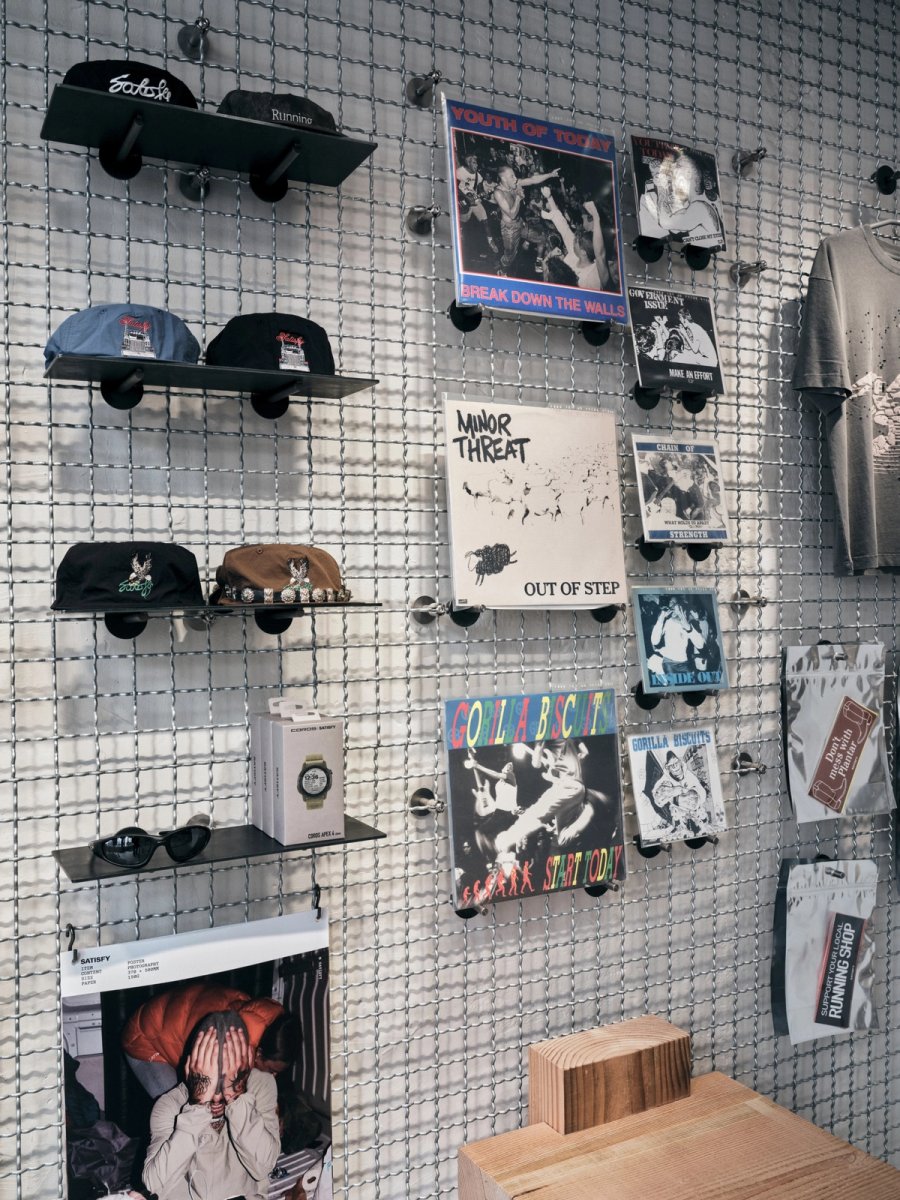
That difference matters. Concrete gives the room weight. Wire mesh creates a permeable boundary between the shelving and the wall. Douglas fir introduces a warmer sense of time among the harder surfaces. Wool felt softens sound and touch. Stainless steel and cast zamak call up a functional, industrial world with something of the workshop in it.
Here, Material Intelligence is not concerned only with how a material looks, but with what it does inside the space. A surface becoming a display area, a shelf carrying weight, a pipe remaining visible rather than being concealed: each decision shapes how the products are read. Satisfy’s technical clothing therefore does not appear simply as high-performance equipment. Among the raw surfaces, it becomes part of an everyday vocabulary of sweat, friction, and changing weather.
The Paris-based studio ciguë worked with the existing traces of the building rather than erasing them. The approach is close to running itself. A run never begins from zero; it carries something from the previous one in the sole of the shoe, the salt marks on the fabric, the fatigue in the body, and the desire to return to the same route.
II. MATERIAL MEMORY: THE PAST OF A RUNNING STORE
The materials at Supply were not chosen to create a decorative image of the past. They bring together memories from other forms of use. Wire mesh recalls warehouse shelving; cardboard boxes suggest service areas; automotive carpet points towards garages; exposed pipes bring the workshop into the room. Satisfy places these memories beside technical running clothes.
Supply therefore feels closer to older images of working life than to the polished future of a sports store. Running is removed from a sterile performance environment and returned to a more physical world of dust, metal, cables, sound, and repetition. Material Memory does not mean that a material has to look old. It means remembering where it has been before, and what kind of behaviour it carries now.
At the centre of the space is a large three-part oil painting by New York-based artist Othelo Gervacio. Drawing from natural-history dioramas and American West realism, the work establishes an unexpected scale beside the running clothes. A bespoke chair by Jean-Baptiste Durand, a second-hand tuning-car subwoofer covered in automotive carpet, old magazines, jewellery, and punk records belong to the same environment.
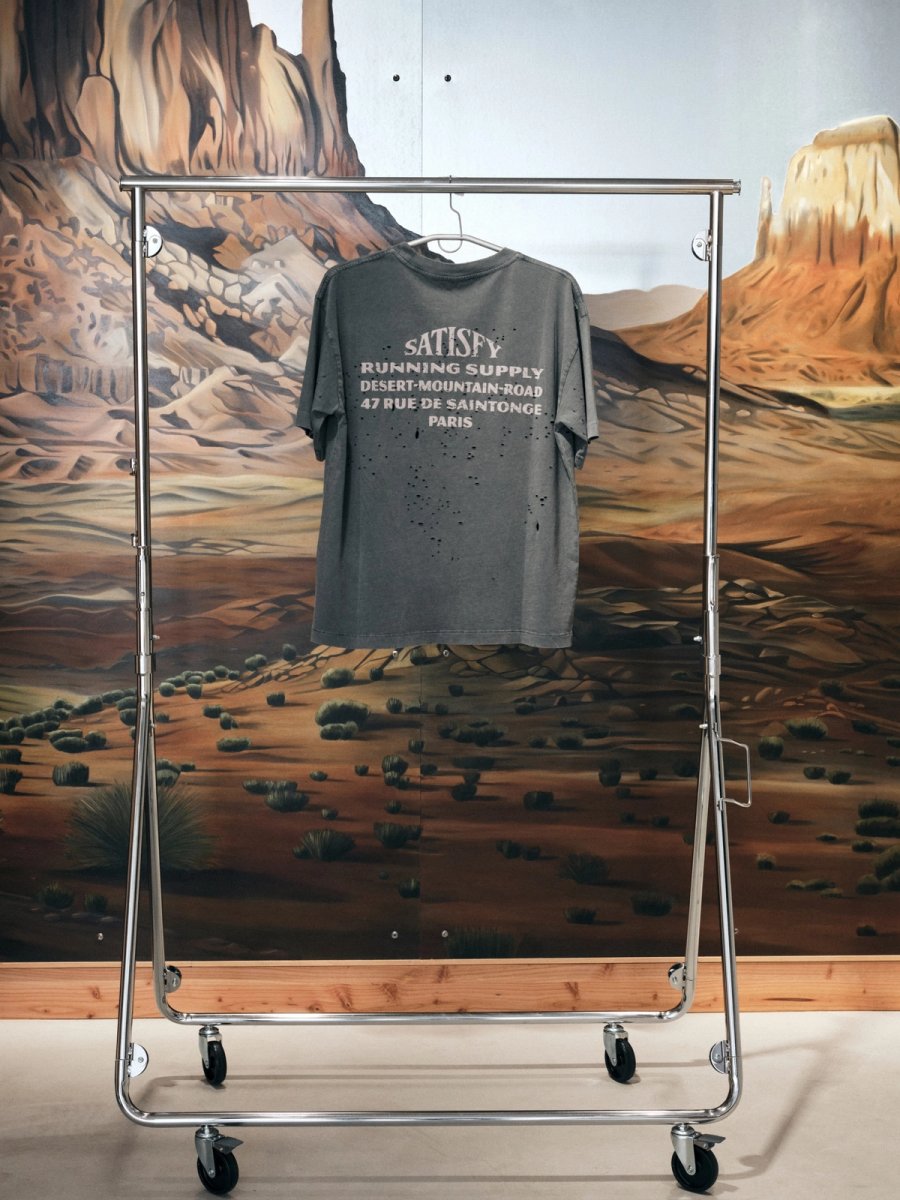
When a Minor Threat record sits beside a running T-shirt, the two objects do not need to explain one another. The distance between them already says enough. Satisfy’s runner is not simply a body accumulating kilometres. They listen to music, collect old objects, look at sound systems, care about the chair they sit in, and want to wear their clothes in the city as well as on the road.
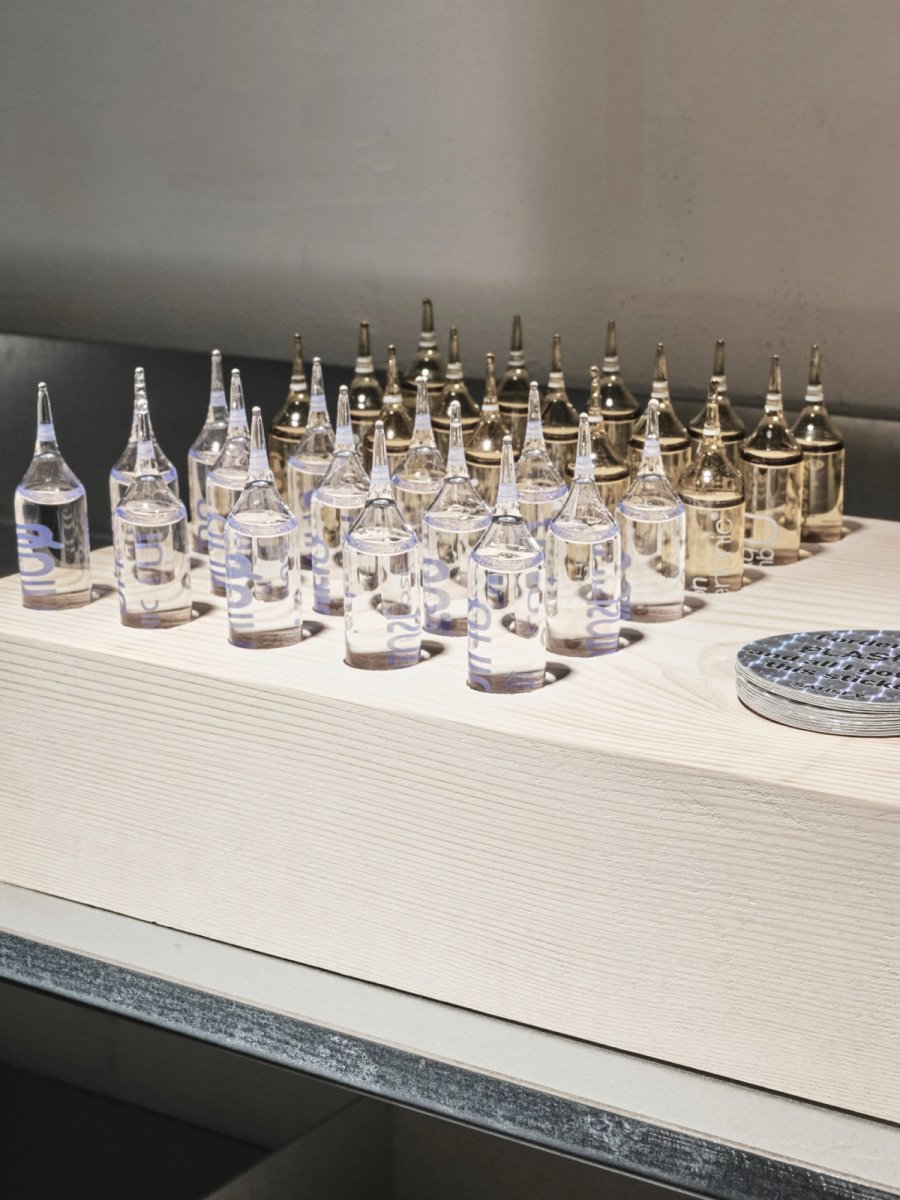
The name Fuel Station carries more than a metaphor. At a petrol station, a vehicle stops, takes on fuel, and returns to the road. Here, the body takes the place of the engine. Coffee, electrolytes, water, and gel become parts of a small energy economy calculated before the run.
This is how the brand expands the idea of running culture. It does not impose a new identity on the runner so much as hold together the contradictions already there: discipline and disorder, technical need and aesthetic desire, the wish to be alone and the desire to remain visible in the city.
III. FUEL STATION AND THE PHYSICS OF CONTINUATION
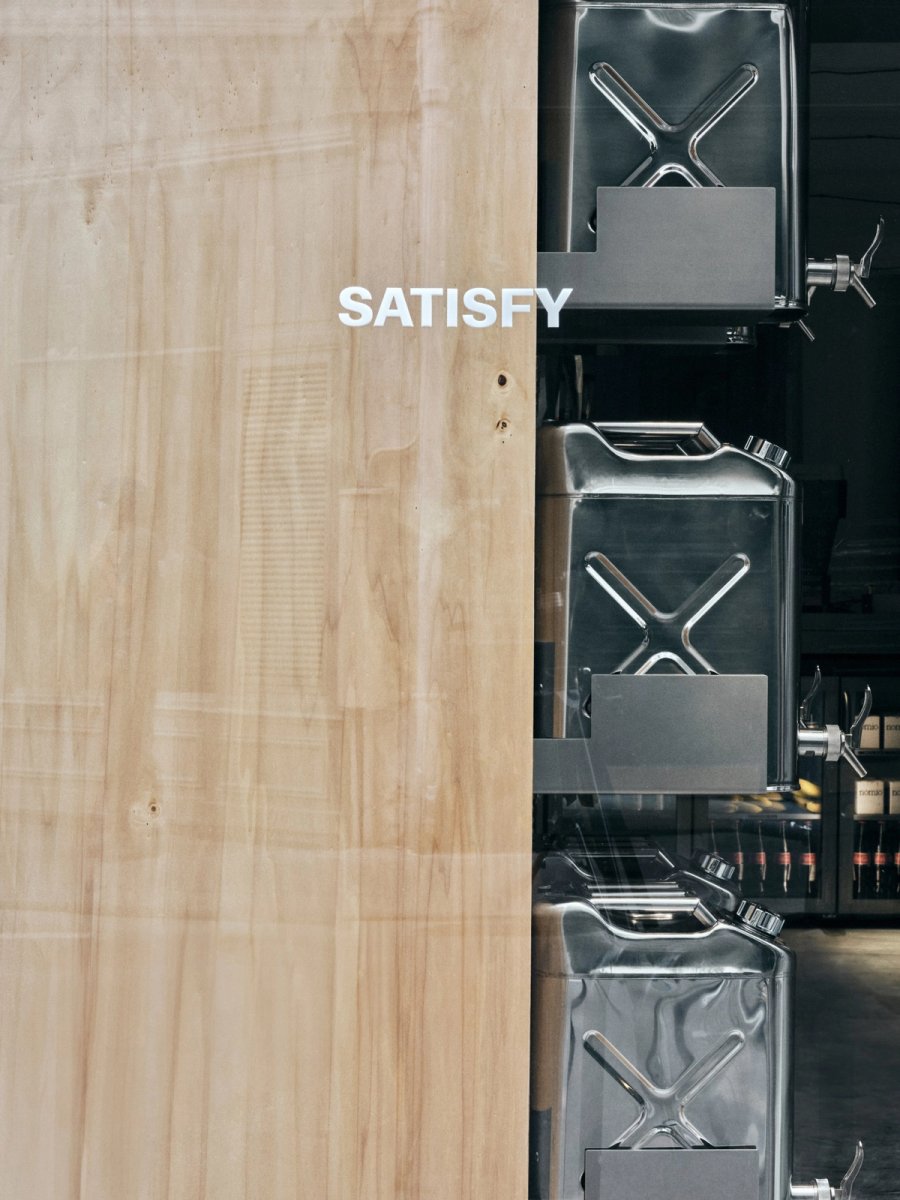
Across the street, Fuel Station carries the past gathered at Supply into another register. Steel shelving, cardboard boxes, and wire-mesh surfaces create a faster, more practical order. Water and electrolytes can be filled into flasks, belts, and speed cups. A seaweed-based gel is produced on site; mushrooms are grown inside the space.
Material memory appears here in a more ordinary form. The cardboard box recalls storage; the steel shelf, organisation; the refill surface, repeated use; the flask, movement. None of these objects is designed to be looked at for very long. Their purpose is completed through the hands and the body.
At Supply, we stand around a product and look at it. At Fuel Station, we think about when it will be opened, how much will be consumed, and how long it will carry us. The difference between the two spaces is not simply a division between aesthetics and use. It concerns the way an object enters time.
Satisfy founder and creative director Brice Partouche has said that the brand is not designed for a wider audience, but for its own understanding of running. As reported by Highsnobiety, this position also explains why the stores do not try to make themselves instantly legible to everyone. Satisfy does not offer a ready-made lifestyle package; it places materials, sounds, clothing, and rituals beside one another and lets its own logic emerge.
WANC JOURNAL SPECIAL NOTE
The real subject of Satisfy’s two Paris spaces is not running clothing. It is the material life that gathers around performance.
Before heading out, a runner is not simply changing clothes. They are adjusting their weight, water, sound, temperature, and attention. Supply collects the cultural side of this adjustment: oil paintings, records, magazines, chairs, automotive carpet, metal, wood, and raw walls. Fuel Station makes the adjustment physical: water, coffee, electrolytes, gel, a flask, and a short pause.
This is why the street between the two shops cannot remain a simple passage. For a few seconds, Satisfy’s entire design idea becomes visible there. On one side, objects stand with the weight of the past. On the other, the same body prepares to carry that weight forward.
Satisfy’s Material Intelligence lies as much in the fact that an old record and a new running T-shirt can occupy the same room as it does in the performance of a technical fabric. Its Material Memory is the way older lives carried by concrete, wire mesh, cardboard, automotive carpet, and exposed pipes enter the language of running today.
The brand is not selling running as a sport from the future. It is building it from the materials of the past, the bodies of the present, and the small preparations that begin again every morning.
Sonraki Yazı
THE SILENT INFILTRATION: DISCREET ADDITIONS AND THE ARCHITECTURE OF DESIRE
Okumaya Devam Et
essay